The Effect
A Card Flies Out and Comes Back to Your Hand
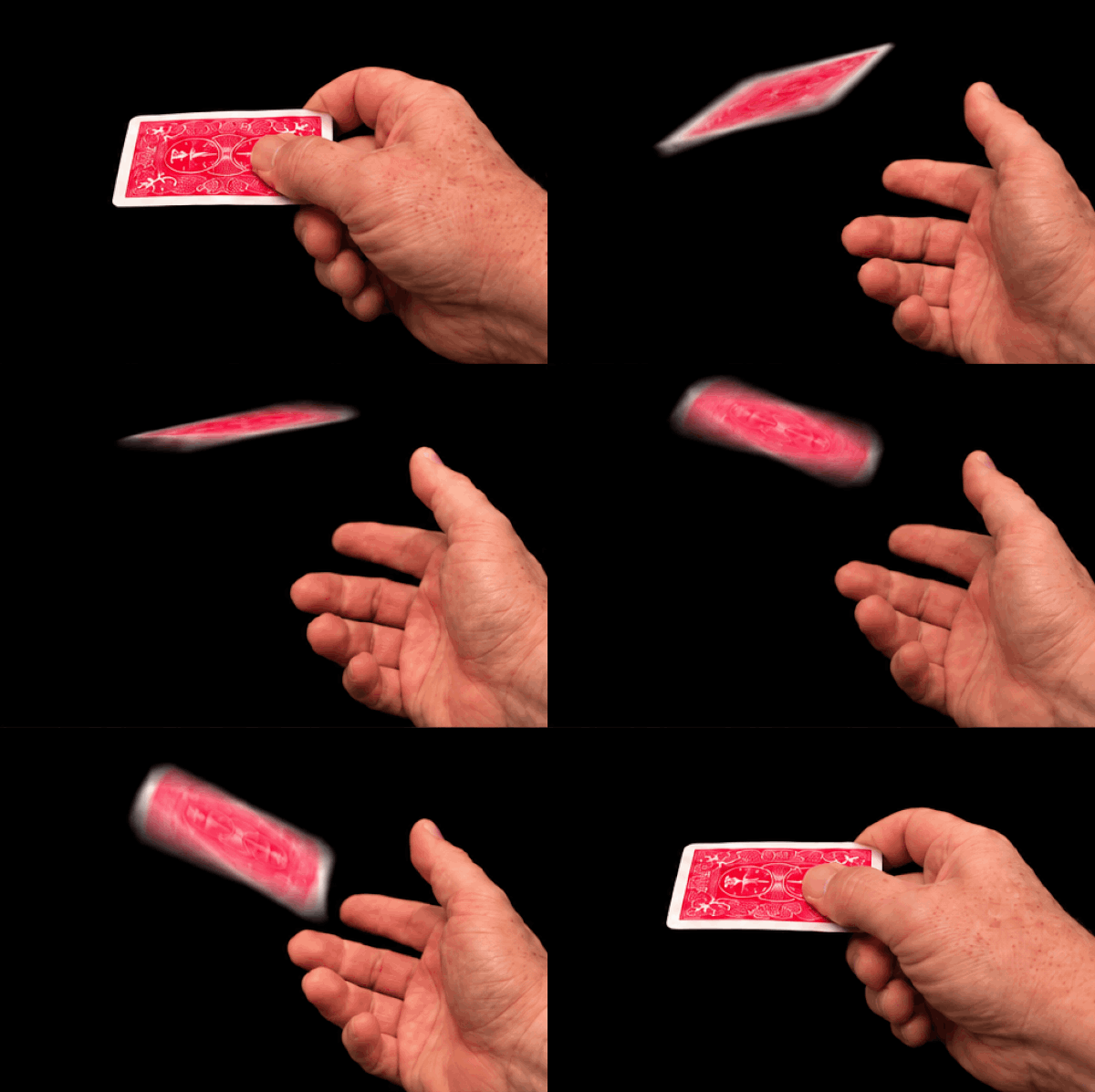
The card is held lengthwise near your chest. With a forward pivot of the wrist and a sharp release, it shoots into the air while spinning. When the angle and spin are right, its flight curves back towards you, allowing you to catch it.
The move uses just one playing card. The secret is not a gimmick: it is the combination of the grip, wrist direction, release angle and the extra spin created by your first finger.
Preparation
What You Need
You only need a playing card to perform the flourish. It is useful to have a spare pack nearby while practising, as you will need to repeat the wrist action and timing many times.
🎩 Practice Tip
Start with a single card and work on a controlled, consistent release before trying to catch it. Practise in a space where the card can land safely and be retrieved easily.
Pre Bend The Card
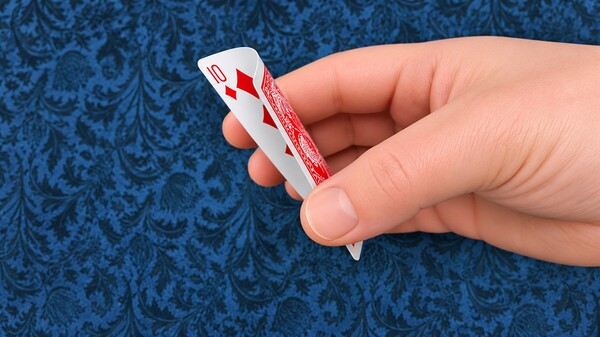
Let's pre bend the card a little bit by giving it a gentle squeeze.
This is going to allow the card to stay airborne a little longer, before making its way, back to your hand.
Hold the Card in the Correct Grip
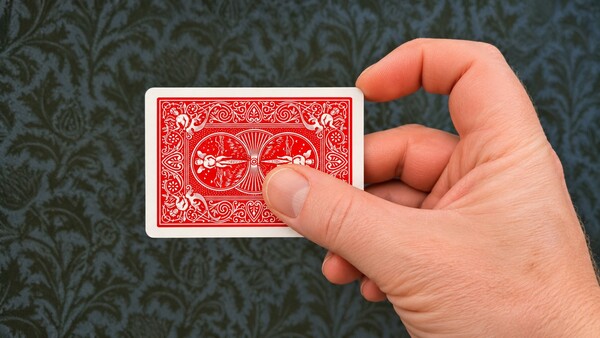
Hold the playing card lengthwise, with your thumb supporting the lower part of the card.
Place your first finger against the top-right corner. This position is important because that finger helps create the spin that gives the card stability and control. Pinch the underside of the card with your middle finger.

Practise the Wrist Pivot
Bring the card up to chest height and hold it close to your body. Practise pivoting your wrist backwards and forwards without releasing the card.
When your hand reaches the fully forward position, the card should be pointing straight out in front of you. Avoid allowing the wrist to turn off to one side, as an angled release makes the card less likely to return.
Flick and Release the Card
Once the wrist pivot feels consistent, bring the card back to the starting position close to your chest, just underneath your chin.
Pivot your wrist fully forward and release the card from your thumb and middle finger. Aim to send it straight ahead and slightly upwards, at an angle of less than 45 degrees. Starting from chest height makes the returning card easier to catch.
Add Extra Spin with Your First Finger
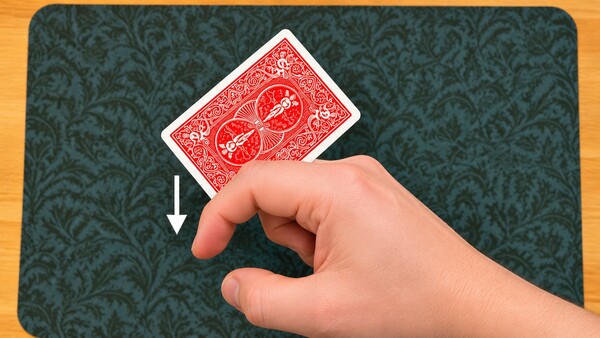
As you release the card, try flicking your first finger downwards from the top-right corner at the exact moment the card leaves your grip.
This extra finger action increases the spin and can give you much greater control over the card's flight. The timing is subtle, so practise it slowly before building up speed.
Follow the Flight and Catch the Card
The rest of the flourish comes down to timing and coordination. Watch the card's path and practise bringing your hand into position as it curves back towards you.
Keep the throw straight and consistent. Small changes in wrist angle, release direction and finger flick can make a big difference to whether the card returns within reach. Build up to catching it in mid-air only when the flight is becoming predictable.
Why the Card Returns
The returning flight depends on the direction and angle of the throw together with the spin placed on the card. A release that travels off at an angle is less likely to come back towards you. The first finger's downward flick adds spin, helping you gain greater control over the flight and flying angle.
🧠 The Key Is Consistency
Repeat the same grip, chest-height starting position and straight wrist pivot. Once the card follows a predictable path, work on the catch.
Performance Tips
🖐 Keep the Grip Consistent
Use the same thumb, first-finger and middle-finger positions on every attempt.
↗ Aim Straight Ahead
Keep the wrist pivot aligned with your body and avoid sending the card off at an unintended angle.
🌀 Time the Finger Flick
The downward flick should happen at the moment the card is released, not before or after.
🎯 Learn the Flight Before the Catch
First aim for a repeatable return path. Add the catch after you can predict where the card will travel.
Common Mistakes
The card shoots off to one side
Check that the card is pointing straight ahead when your wrist reaches its fully forward position. Practise the pivot without releasing the card.
The card does not spin consistently
Check the first-finger position at the top-right corner and practise the downward flick at the instant of release.
The card does not return within reach
Work on a straight release from chest height and a slightly upward angle of less than 45 degrees. Make small adjustments rather than changing several parts of the throw at once.
The catch feels rushed
Spend time learning the card's flight before trying to catch it. A consistent throw makes the timing much easier.
Practice Plan
1. Learn the Grip
Set the thumb, first finger and middle finger in the correct positions and hold the card securely.
2. Rehearse the Wrist Pivot
Practise the backwards-and-forwards wrist movement with the card close to chest height.
3. Add the Release and Spin
Release straight ahead while adding the first finger's downward flick at the same moment.
4. Work on the Catch
Once the card returns on a predictable path, practise meeting it with your hand and catching it in mid-air.