The Effect
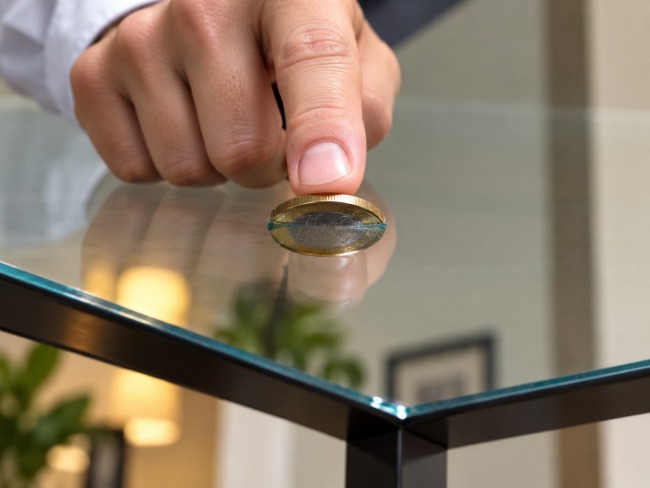
A coin is shown openly on top of a glass table.
It is covered with a napkin and rubbed against the surface. After a magical gesture, the coin appears to penetrate the solid glass and is caught by the magician beneath the table.
The routine was popularized in a memorable performance by Criss Angel and is a strong example of how simple preparation, natural props and good timing can create an impossible-looking effect.
Before You Begin
You will need a glass-topped table, two matching coins and an ordinary napkin.
One coin is used openly during the performance. The second coin is secretly positioned beneath the table before the routine begins.
Practise the timing of the vanish and the catch before performing. The secret is simple, but the illusion depends on smooth coordination.
Watch the Performance and Explanation
The video below shows the complete routine and explains the method used to create the penetration effect.
How the Illusion Works
The routine uses two matching coins.
The audience sees one coin on top of the table, while the second coin has already been hidden beneath it.
During the rubbing action, the visible coin is secretly concealed or removed. At the same moment, the hidden coin is released into the catching hand beneath the table.
Because the actions happen together, spectators connect the disappearance above with the appearance below and believe the same coin travelled through the glass.
Prepare the Visible Coin
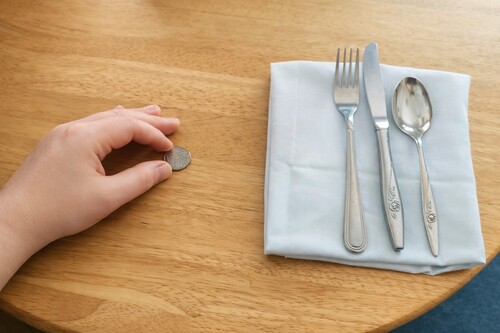
Place the first coin openly on top of the glass table.
Keep an ordinary napkin nearby so it appears to be a natural part of the table setting.
The casual setting helps make the effect feel completely impromptu.
Position the Hidden Coin
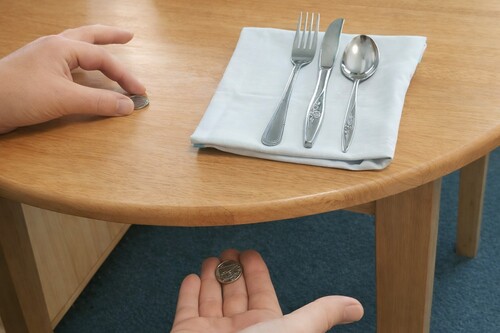
Before the performance, secretly place the matching coin beneath the glass table.
Position it where your hand can reach it naturally during the final catch.
Make sure the coin cannot be seen from the audience’s viewing angle.
Performing the Penetration
Cover the visible coin with the napkin and begin rubbing it against the glass.
During the rubbing action, secretly retain or remove the visible coin while keeping the shape beneath the napkin believable for a moment.
At the same time, reach beneath the table and release the hidden coin into your hand.
Lift the napkin to show that the coin has vanished, then reveal the matching coin beneath the table.
🎩 Magic Tip
The effect succeeds because the spectators never suspect that the table was prepared before the performance.
Why the Setting Matters
The strongest part of this routine is that every prop appears to belong naturally in the location.
A napkin, coin and glass table do not look like special magic equipment, so the audience has no obvious method to suspect.
Present the trick casually, as though the idea has just occurred to you. That relaxed style makes the secret preparation much less likely to be considered.
Performance Tips
Keep the napkin movement slow and consistent. Sudden movements can make the vanish look suspicious.
Time the vanish above and the appearance below as closely as possible.
Avoid looking beneath the table before the reveal. Your eyes can accidentally direct attention toward the secret coin.
Perform for spectators positioned mainly in front of the table. Side angles may expose the hidden coin or the secret handling.
Common Mistakes
Do not use coins that look noticeably different.
Make sure the hidden coin is secure and easy to reach before beginning.
Avoid overacting the magical moment. A calm, confident performance is more believable.
Do not allow spectators to inspect beneath the table before the routine.