The Effect
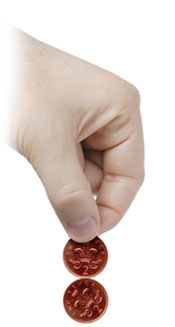
Two coins are borrowed and examined.
You touch them together and they appear to stick.
With a light breath or gentle touch, the lower coin begins to spin while remaining attached beneath the upper coin.
The coins are then handed back for examination.
What You’ll Need
🪙 Two Magnetic Coins
Test the coins first because some modern coins are not attracted to magnets.
🧲 Small Neodymium Magnet
A magnet around 6 mm × 3 mm is small enough to conceal easily.
🎭 Natural Patter
Conversation helps cover the tiny sound when the magnet meets the coin.
Conceal the Magnet
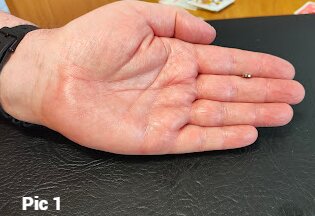
Pinch the small magnet secretly between the first and middle fingers.
Keep the hand relaxed so the concealment looks natural.
Load the First Coin
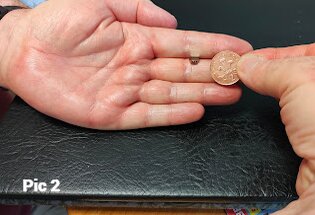
Take back one examined coin with the hand that does not hold the magnet.
Bring it slowly toward the concealed magnet hand and let the magnet attract it.
Move gently to avoid a loud click.
Covering the Sound
Use a line such as, “I’m charging the coin with static electricity.”
Rub the coin lightly on your clothing while the magnet settles into position.
The movement and conversation disguise any small clinking sound.
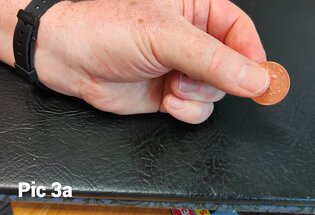
Hold the Magnetised Coin
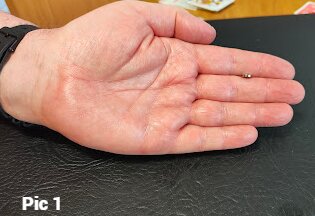
Grip the coin and magnet together between the thumb and first finger.
Keep the magnet hidden behind the coin.
Turn the safe side toward the audience.
Control the Viewing Angle
If your fingers do not fully hide the magnet, show only the opposite side.
Keep spectators mainly in front of the coin.
Add the Second Coin
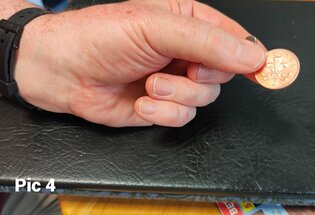
Bring the second coin underneath the first.
Let the magnetic attraction hold the coins together.
Keep the second coin slightly away from the magnet itself so it does not jump sideways.
Make the Coin Spin
Blow gently on the lower coin or touch its edge lightly.
It should rotate while remaining suspended beneath the upper coin.
Keep the upper hand steady so the spinning motion remains clear.
Finish Cleanly
Drop the first coin into the spectator’s hand or onto the table.
As you release the second coin, secretly remove the magnet with the fingers.
Palm the magnet or place it safely into a pocket.
Why the Trick Works
The hidden neodymium magnet magnetises the upper coin strongly enough to attract the lower coin.
The coins appear ordinary because the gimmick remains concealed behind one of them.
Removing the magnet during the final handoff leaves both coins examinable.
Performance Tips
Test every coin before the performance.
Load the first coin slowly to avoid noise.
Position the magnet near the edge rather than directly in the centre if that feels more natural.
Pause before blowing on the lower coin.
🎩 Magic Tip
Let spectators supply a handful of change, then apparently choose two suitable coins at random. Test them secretly beforehand.
Common Mistakes
Do not assume every coin is magnetic.
Avoid letting the magnet snap loudly onto the coin.
Keep the hidden side turned away from spectators.
Do not place the lower coin too close to the magnet.
Remove the magnet before allowing examination.
Practice Plan
Practise concealing and retrieving the magnet without coins.
Add the first coin and rehearse a silent magnetic load.
Practise positioning the second coin until it spins reliably.
Rehearse the cleanup separately before performing the full sequence.