Why the Pinky Break Matters
A Pinky Break is a small hidden gap held inside the deck with the tip of your little finger.
It lets you keep track of a selected card, separate packets, prepare a Double Lift and control cards without drawing attention to your hands.
Before You Begin
Hold the deck in a comfortable Mechanics Grip. Keep your hand relaxed and avoid squeezing the cards.
The break should be very small. You only need enough space for the tip or pad of your little finger.
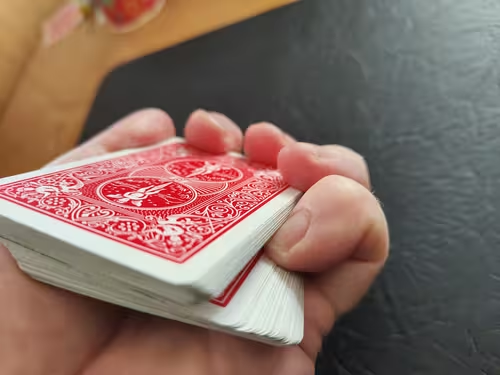
Create the Break
Slightly bevel the deck toward your outer fingers so your little finger can feel the edge of the cards more easily.
Insert the tip of your little finger at the position you want to remember.
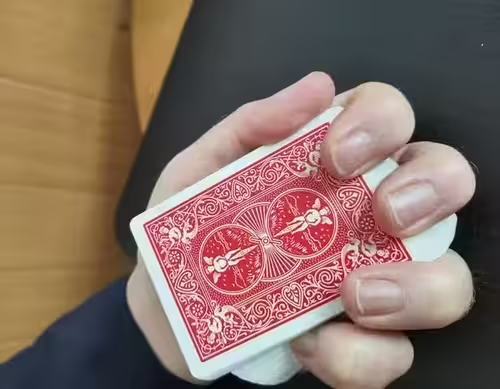
Hide the Break
Keep the front edge of the deck slightly higher than the edge closest to you.
Press gently with your thumb and outer fingers so the gap cannot be seen from the spectator’s viewpoint.
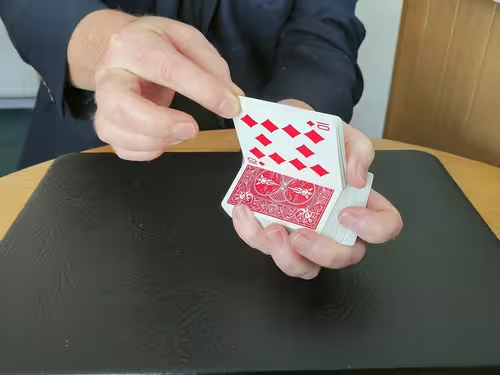
Use the Break
The break allows you to lift or turn over all the cards above it as one packet.
This is useful for revealing a selected card, controlling packets and preparing other sleights.
Practice Tips
Practise holding the break while speaking or looking at the spectator. Your attention should not remain fixed on the deck.
Keep the break as small as possible. A large gap is easier to detect and makes your hand look tense.
Practise obtaining the break beneath one card, several cards and a larger packet.
Learn to release the break smoothly without making a visible movement.
Common Mistakes
Do not insert too much of your little finger into the deck.
Avoid squeezing the cards tightly, as this can expose the gap at the front edge.
Keep your hand in a natural dealing position rather than twisting the deck toward yourself.