The Effect
A playing card is secretly removed from the deck and concealed in your hand.
From the audience’s viewpoint, your hand appears relaxed and empty even though the card is hidden against your palm.
Palming can be used to vanish a card, secretly transfer it, load it into another location or produce it later.
What a Good Card Palm Looks Like

Notice how the fingers remain softly curved rather than tightly clenched. The card follows the natural shape of the hand and stays hidden from the spectator’s line of sight.
💡 Pro Tip
The most important part of card palming is not hiding the card—it is making the hand look completely ordinary.
Before You Begin
Start with the card you wish to palm positioned on top of the deck.
Hold the cards in a comfortable Mechanics Grip and keep both hands relaxed.
Practise over a table or soft surface at first, because the card may slip while you learn the correct pressure.
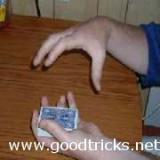
Position the Deck
Hold the deck in your non-dominant hand with the card to be palmed on top.
Keep the deck squared and bring your other hand over it as though you are simply tidying the cards.
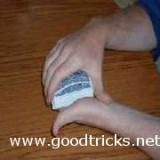
Cover the Top Card
Place your free hand over the deck with the fingers close together.
The upper edge of the card should rest near the first joints of your fingers, while the lower corner approaches the fleshy base of your thumb.
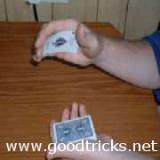
Press the Card into the Palm
Apply light pressure so the card bends very slightly and settles against the natural curve of your palm.
Do not squeeze hard. Too much pressure makes the fingers look stiff and can cause the card to buckle.
Remove the Hand Naturally
Move your palming hand away from the deck as though the squaring action is complete.
Keep the fingers gently curved and the thumb relaxed. Avoid spreading the fingers or turning the palm directly toward the spectator.
The back of the hand can be shown freely, but the palm side must remain angled away.
Natural Actions While Palming
Once the card is concealed, perform an ordinary action so the hand does not appear frozen.
You might gesture, point, reach toward the deck or briefly place the hand near a pocket.
The action should have a reason. Unnecessary hand movement can attract attention to the exact place you want spectators to ignore.
Practice Exercise
Palm a card and hold it for one minute while keeping the hand relaxed.
Next, practise walking around, pointing at objects and picking up lightweight items without exposing or dropping the card.
Finally, practise removing the card from the deck and replacing it without looking directly at your hand.
Common Mistakes
Do not flatten your hand unnaturally. A naturally curved hand hides the card more effectively.
Avoid gripping the card too tightly, as this creates visible tension in the fingers.
Do not turn the palm toward the audience or allow spectators to stand directly at your exposed side.
Make sure the card does not extend beyond the edge of your fingers or the base of your thumb.
Performance Tips
Misdirection is extremely helpful. Palm the card while the spectator is looking at the deck, another object or your face.
Keep talking naturally during the move. Silence can make an ordinary action feel important.
Practise with different card stocks. Some cards are more flexible or slippery than others.
Use the palm as part of a complete routine rather than showing it as an isolated secret move.