The Effect
A Coin Apparently Passes Through the Deck
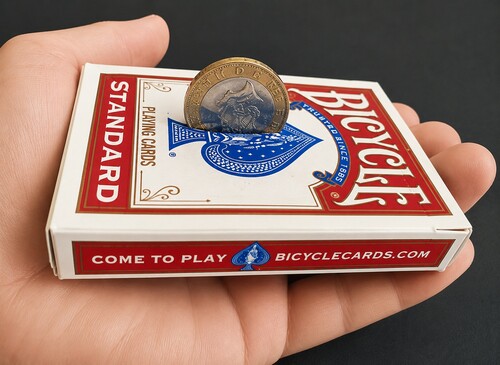
A coin is held openly above a boxed deck of playing cards. You begin rubbing the coin against the top of the box as though trying to push it through.
The coin appears to sink away beneath your fingers. At the same moment, a coin drops from underneath the deck, creating the illusion that it has travelled straight through the cards and box.
The fallen coin can immediately be picked up and examined.
Preparation
What You Need
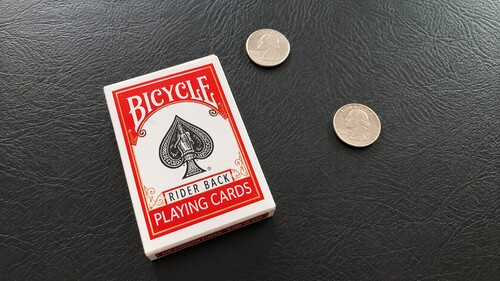
You need a deck of playing cards in its box and two identical coins.
One coin is shown openly during the trick. The second is secretly concealed in the hand holding the deck and creates the apparent penetration.
🎩 The Main Secret
The effect depends on the two coins looking identical. The audience believes the coin that falls from beneath the deck is the same coin being rubbed on top.
Prepare the Props
Have the boxed deck and two matching coins ready before you begin.
The closer the two coins match in size, colour and condition, the more convincing the effect will be.
Conceal the Duplicate Coin
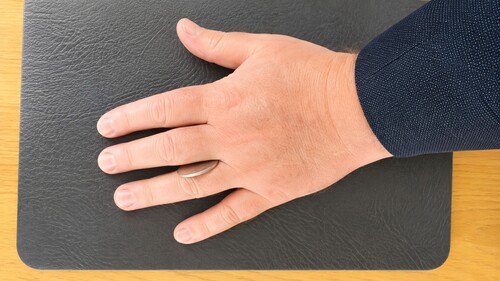
Before the trick begins, carefully position one coin between the middle two fingers as shown.
Hold it securely enough that it will not fall, but avoid creating visible tension in the hand.
Keep the Hand Looking Natural
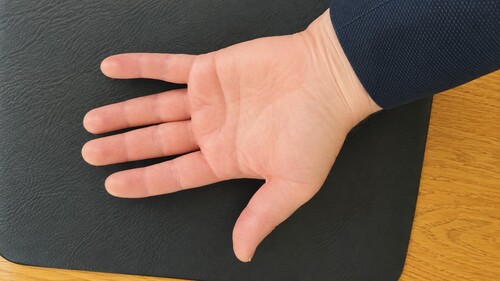
From the palm side, the concealed coin should remain hidden from the audience.
You should still be able to move the hand and curl the fingers naturally. Practise until the concealment does not make your hand look stiff or unusual.
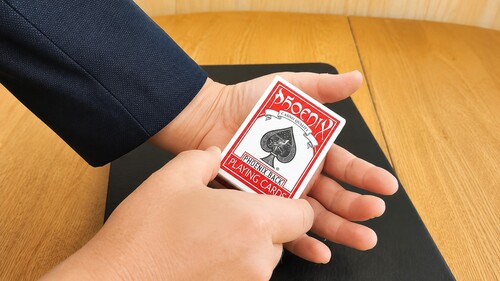
Place the Deck in the Concealing Hand
Place the boxed deck into the same hand that contains the hidden coin.
The deck gives your hand a natural reason to remain in position and helps conceal the duplicate coin.
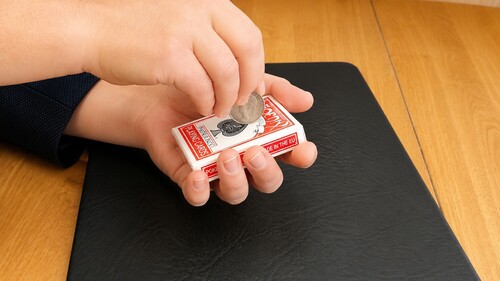
Rub the Visible Coin on the Deck
Pick up the second coin between two fingers and tell the spectator that you are going to try to make it pass through the deck.
Begin rubbing the coin against the top of the card box. Keep the action deliberate enough for everyone to follow.

Create the Penetration
Continue rubbing while gradually sliding your upper fingers down over the visible coin so it appears to sink into the box.
At the same time, relax the fingers holding the hidden duplicate and allow that coin to drop from beneath the deck.
Slowly withdraw the upper hand. The timing of these two actions creates the illusion that the visible coin has travelled through the pack.
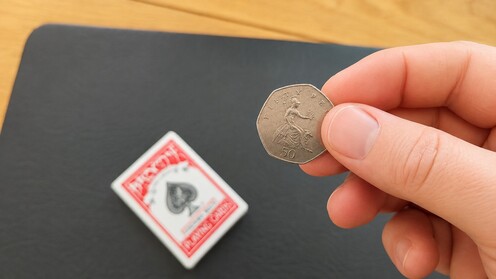
Let Them Examine the Coin
Immediately invite the spectator to pick up and examine the coin that has fallen from beneath the deck.
This gives them a strong moment of confirmation while naturally directing their attention away from your other hand.

Dispose of the Duplicate
While the spectator is focused on examining the fallen coin, casually place the duplicate coin into your pocket.
Do not rush this action. The audience already has a good reason to look elsewhere, so the clean-up should feel completely unimportant.
Why the Illusion Works
The spectator's attention follows the visible coin on top of the deck. As your fingers gradually cover it, the coin seems to disappear into the card box.
Releasing the concealed duplicate at exactly the right moment provides the visual and audible proof that the coin has come through the other side.
🧠 Timing Is the Secret
The upper coin becoming hidden and the lower coin dropping should feel like a single event. If the actions happen too far apart, the illusion becomes much weaker.
Performance Tips
🖐 Relax the Concealing Hand
A stiff hand attracts attention. Practise holding the hidden coin while moving your fingers naturally.
⏱ Coordinate the Drop
Release the duplicate as the visible coin becomes covered by the upper fingers.
👀 Direct Attention to the Fallen Coin
As soon as the coin drops, look towards it yourself. Spectators will naturally follow your attention.
🎭 Keep the Clean-Up Casual
Pocket the duplicate only when the audience is busy examining the coin that apparently passed through.
Common Mistakes
The hidden coin flashes between the fingers
Adjust the finger position and practise in a mirror from the spectator's viewing angle.
The hand looks stiff
Use less pressure when holding the concealed coin. You should still be able to curl and move the fingers comfortably.
The falling coin looks disconnected from the vanish
Work on timing. The hidden coin should drop at the moment the visible coin is being covered and apparently pushed through the box.
The spectator notices the duplicate during clean-up
Do not pocket it immediately after the drop. First direct attention to the coin on the table or floor, then dispose of the duplicate during that natural pause.
Practice Plan
1. Practise the Concealment
Hold the duplicate between the fingers until your hand looks completely relaxed.
2. Practise the Release
Learn to drop the hidden coin cleanly without moving the rest of the hand.
3. Synchronise Both Coins
Rehearse covering the visible coin at exactly the same moment the duplicate falls.
4. Add the Clean-Up
Practise directing attention to the fallen coin before casually pocketing the duplicate.