The Effect
A spectator cuts the deck wherever they like.
After a brief pause, they look at the card they apparently cut to. Although the choice seems completely fair, they are actually shown the card you intended from the beginning.
Why the Cross Cut Force Works
The method relies on a simple misunderstanding of which packet came from where.
By placing one packet crosswise over the other and allowing a short pause, the spectator loses track of the original order.
This small delay is called time misdirection, and it is the key to making the force convincing.
Before You Begin
Decide which card you want to force and place it on the bottom of the deck.
You may simply remember the existing bottom card, or secretly arrange a particular card there before the performance.
Keep your handling casual. The force is strongest when the cut appears unimportant.
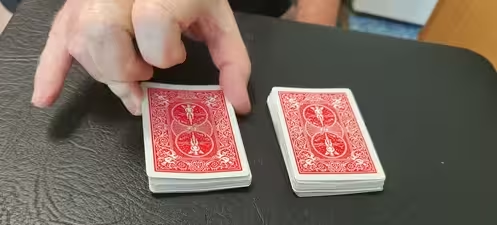
Invite the Spectator to Cut
Place the deck face down on the table and ask the spectator to cut off a packet from the top.
Ask them to place the lifted packet beside the remaining cards.
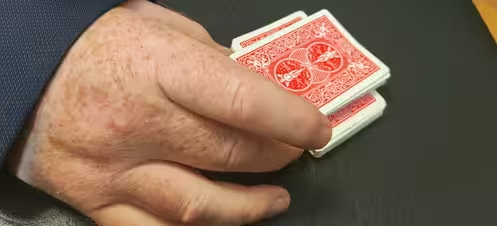
Form the Cross
Pick up the original lower packet and place it sideways across the spectator’s packet.
The two packets should form a clear cross shape.
Add Time Misdirection
Do not reveal the card immediately.
Pause for a few seconds and say something unrelated, such as explaining that the spectator could have cut anywhere.
This delay causes them to forget which packet originally came from the top and which came from the bottom.
💡 Pro Tip
The pause is not optional. Revealing the card too quickly makes the packet order easier to remember.
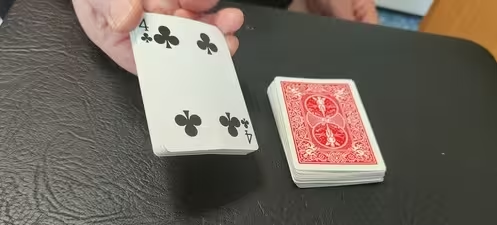
Reveal the Forced Card
Lift away the crosswise packet and point to the top card of the packet left on the table.
Ask the spectator to look at and remember that card.
It will be the original bottom card—the one you intended to force.
Practice Tips
Rehearse the wording so the pause feels natural rather than deliberate.
Keep your hands relaxed and avoid touching the packets more than necessary.
Practise with different pause lengths until the sequence feels conversational.
Use the force inside a complete trick rather than presenting it as a move by itself.
Common Mistakes
Do not reveal the card immediately after making the cross.
Avoid over-explaining which packet is which.
Do not stare at the forced card or treat it as important.
Make sure the spectator cuts only once before the packets are crossed.