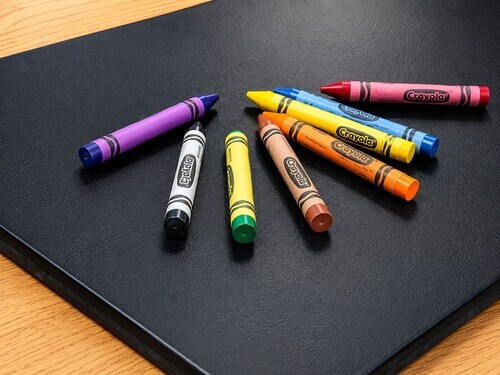
Step 1
Introduce the Experiment
Explain that you have been practising a new mind-reading ability.
Hand the spectator several crayons and ask them to mix the colours.
Magic For Parties And Friends
Learn some easy tricks that are a lot of fun to try out with your friends at parties and social occasions Although being quick to learn, these tricks will have your friends asking for more!
Easy
Easy to Find Items
10 Minutes
Magic tricks, when used to entertain your friends, should be fun to learn and perform. The following tricks have been cherry picked as they are easy to get started with and see results fast. This cuts out the frustration and the will to give up half way through, that can be encountered with more difficult routines. Hopefully, you will find learning and performing them to be an enjoyable and rewarding experience. They are also easy enough to be remembered and to get ready to impress and amaze your friends at your next meet up or social occasion.
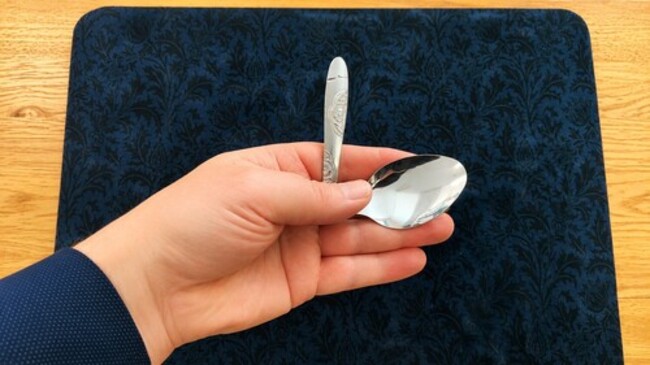
Party Trick 1
You hand one of your friends a bunch of differently coloured crayons.
You turn away and ask them to choose any one.
Without looking at the crayon, you hold it behind your back, apparently trying to sense its colour.
The crayon is returned to the rest of the bunch and you correctly name the colour.
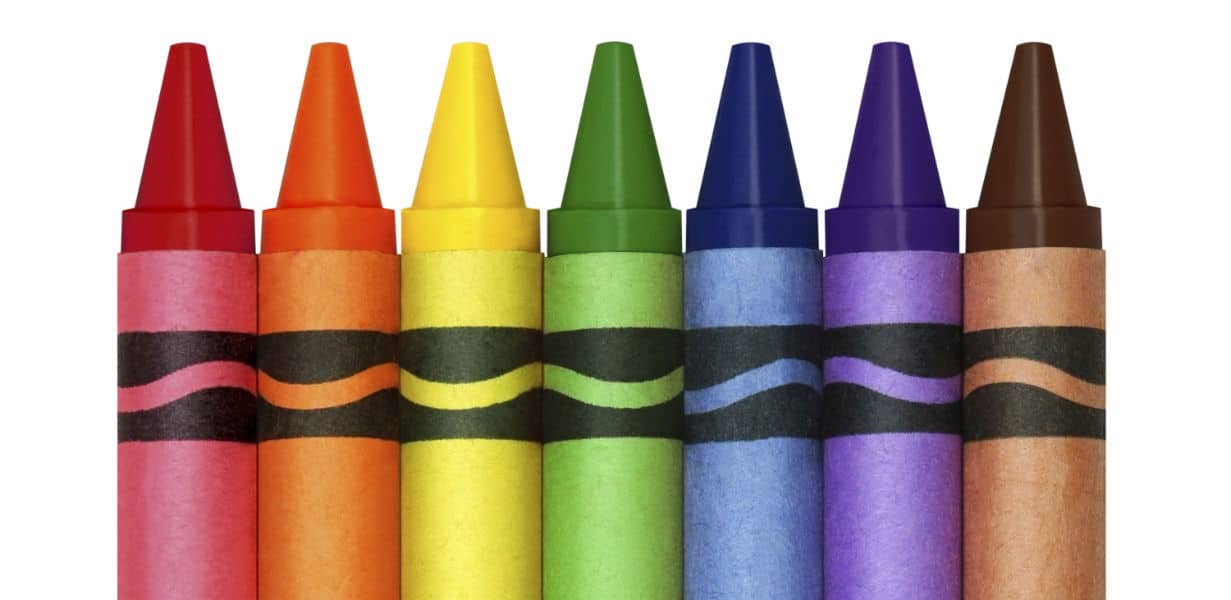
Use clearly different colours that are easy to identify.
More people can watch, but one person should make the selection.
Explain that you have been practising a new mind-reading ability.
Hand the spectator several crayons and ask them to mix the colours.

Turn your back and place both hands behind you.
Ask the spectator to choose any crayon and place it into one hand.
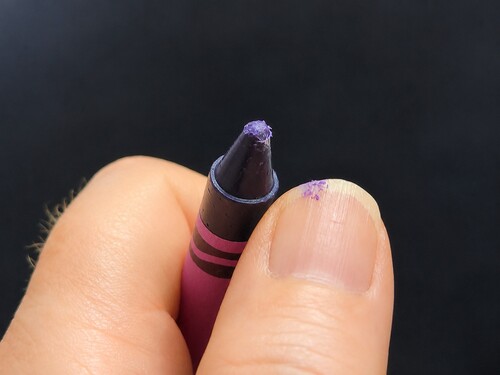
Pretend to concentrate on the crayon and feel for a psychic impression.
Secretly scrape a tiny amount of wax with your thumbnail.
The small coloured mark remains beneath or on the edge of the nail.
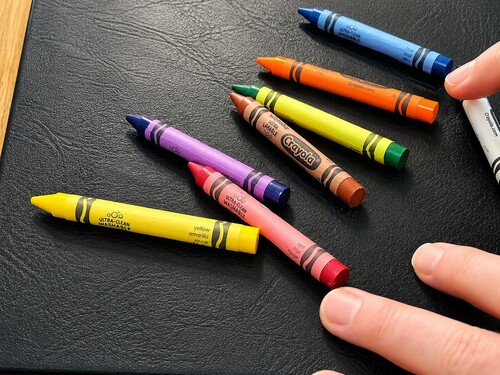
Ask the spectator to take the crayon back and mix it with the others.
This removes the physical evidence from your hands.

Turn around and make a few natural gestures with your hands.
During the movement, take a quick glance at the coloured wax on your nail.
Do not stare directly at the thumb.
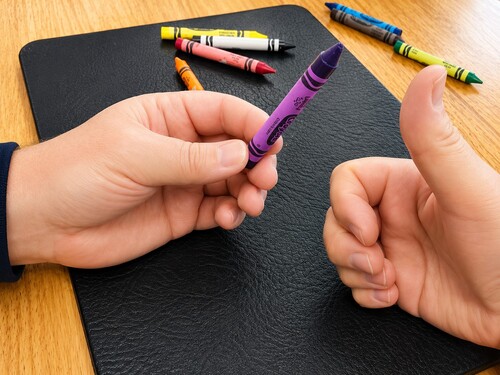
Pause as though receiving the answer.
Name the chosen colour with confidence.
Let the spectator confirm that you are correct.
Party Trick 2
The magician places a coin into a cloth napkin or handkerchief where the audience can apparently see and feel that it remains safely inside.
The napkin orhandkerchief is turned and shaken. A moment later the coin seems to have completely disappeared.

A soft handkerchief or similar piece of cloth such as a napkin, works best for concealing the method.
Use a normal coin that is large enough to be easily seen by your audience.
The elastic band is the secret device that traps the coin inside the folds of the handkerchief.
Before beginning, secretly place an elastic band around the fingers and thumb of the hand that will hold the handkerchief.
When the coin is placed into the cloth, the elastic band is released so that it closes around the handkerchief and secretly traps the coin inside a fold.
You can then hold and shake the handkerchief from another point. From the spectator's side, the coin appears to have vanished even though it is still securely hidden in the cloth.

Place the elastic band around the fingers and thumb of the hand that will hold the handkerchief.
Keep your hand relaxed so the band is not obvious. Place the handkerchief over this hand, completely concealing the preparation.
With your free hand, place the coin into the handkerchief.
Perform this action slowly and clearly. The spectators should be completely convinced that the coin is genuinely inside the cloth.
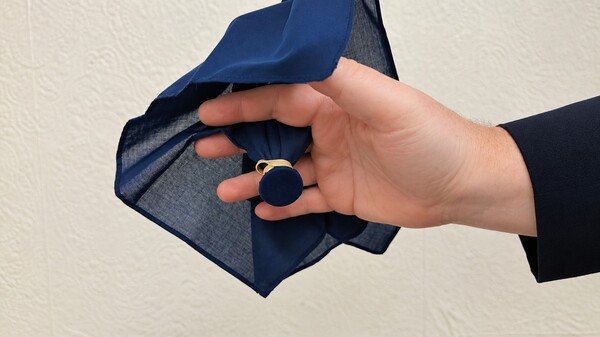
Allow the hidden elastic band to slide from your fingers and close around the handkerchief beneath the coin.
The band now traps the coin inside a small section of cloth. This is the secret that makes the vanish possible.

With the coin, firmly secured with the elastic band, you can now safely show the open handerchief.
Grab it by the two top corners and hold it open, with the side, that does not show the trapped coin, facing your audience.
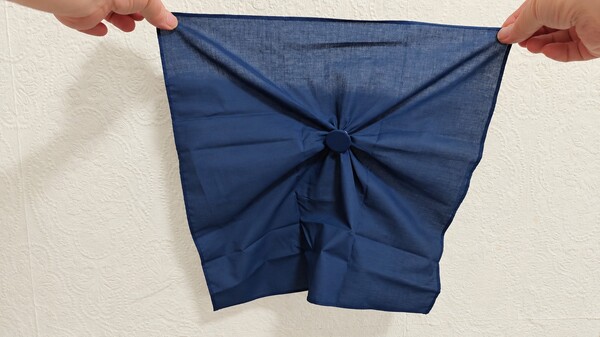
Here you can see the side with the trapped coin, facing yourself.
After showing the empty cloth, casually fold the hanky in two and place it in your pocket.
This should be done in a natural way, so that the audience does not suspect that the coin is still inside.
To the audience, the coin has mysteriously disappeared.
Party Trick 3
A coin is held openly above a boxed deck of playing cards. You begin rubbing the coin against the top of the box as though trying to push it through.
The coin appears to sink away beneath your fingers. At the same moment, a coin drops from underneath the deck, creating the illusion that it has travelled straight through the cards and box.
The fallen coin can immediately be picked up and examined.
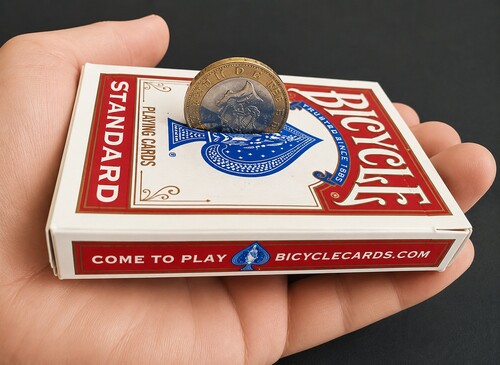
Preparation
You need a deck of playing cards in its box and two identical coins.
One coin is shown openly during the trick. The second is secretly concealed in the hand holding the deck and creates the apparent penetration.
The effect depends on the two coins looking identical. The audience believes the coin that falls from beneath the deck is the same coin being rubbed on top.
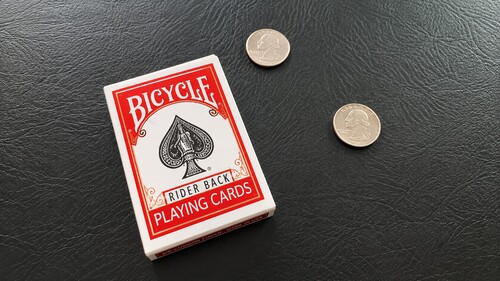
Have the boxed deck and two matching coins ready before you begin.
The closer the two coins match in size, colour and condition, the more convincing the effect will be.
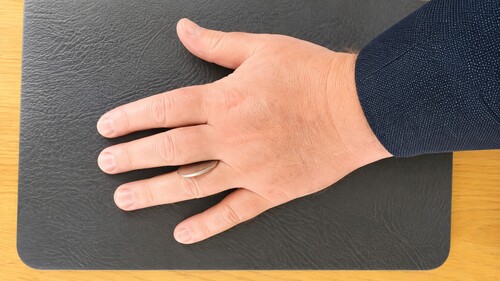
Before the trick begins, carefully position one coin between the middle two fingers as shown.
Hold it securely enough that it will not fall, but avoid creating visible tension in the hand.
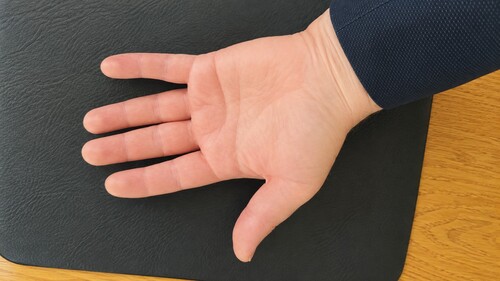
From the palm side, the concealed coin should remain hidden from the audience.
You should still be able to move the hand and curl the fingers naturally. Practise until the concealment does not make your hand look stiff or unusual.
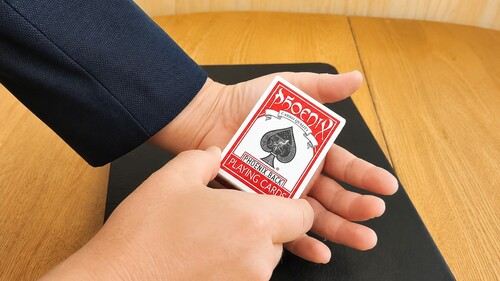
Place the boxed deck into the same hand that contains the hidden coin.
The deck gives your hand a natural reason to remain in position and helps conceal the duplicate coin.
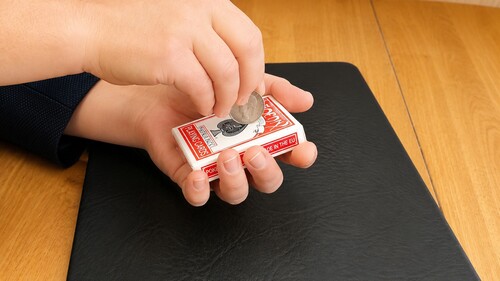
Pick up the second coin between two fingers and tell the spectator that you are going to try to make it pass through the deck.
Begin rubbing the coin against the top of the card box. Keep the action deliberate enough for everyone to follow.

Continue rubbing while gradually sliding your upper fingers down over the visible coin so it appears to sink into the box.
At the same time, relax the fingers holding the hidden duplicate and allow that coin to drop from beneath the deck.
Slowly withdraw the upper hand. The timing of these two actions creates the illusion that the visible coin has travelled through the pack.
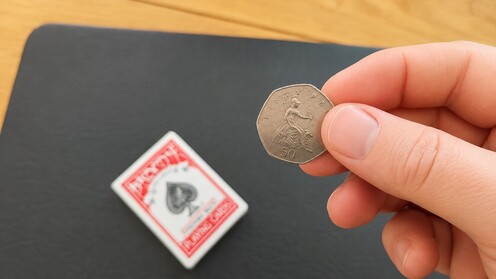
Immediately invite the spectator to pick up and examine the coin that has fallen from beneath the deck.
This gives them a strong moment of confirmation while naturally directing their attention away from your other hand.

While the spectator is focused on examining the fallen coin, casually place the duplicate coin into your pocket.
Do not rush this action. The audience already has a good reason to look elsewhere, so the clean-up should feel completely unimportant.
The spectator's attention follows the visible coin on top of the deck. As your fingers gradually cover it, the coin seems to disappear into the card box.
Releasing the concealed duplicate at exactly the right moment provides the visual and audible proof that the coin has come through the other side.
The upper coin becoming hidden and the lower coin dropping should feel like a single event. If the actions happen too far apart, the illusion becomes much weaker.
Party Trick 4
A finger ring is borrowed and threaded onto a long piece of rubber band.
The band is held between both hands.
The ring slides downward normally at first.
The performer then claims they can make it fall upward, and the ring slowly climbs along the rubber band.

Use a thin, flexible band rather than a thick or brittle one.
A smooth borrowed ring makes the effect feel spontaneous.
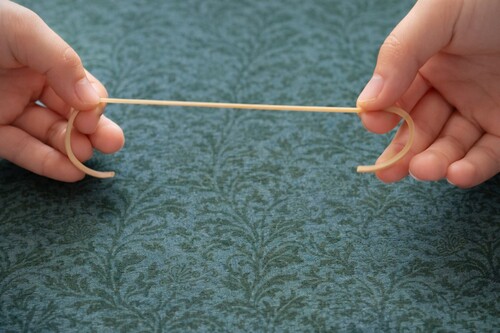
Break or cut the band so it becomes one long elastic strand.
Make sure the ends are clean and safe to handle.
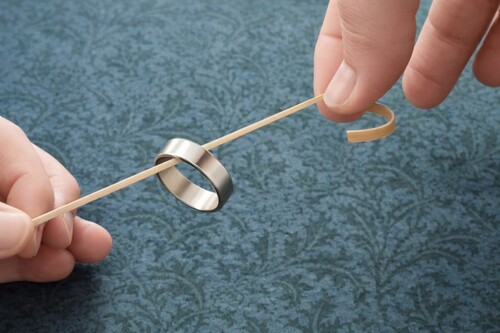
Borrow a ring and thread it onto the rubber band.
Hold one end in each hand with the band stretched to about twelve inches.
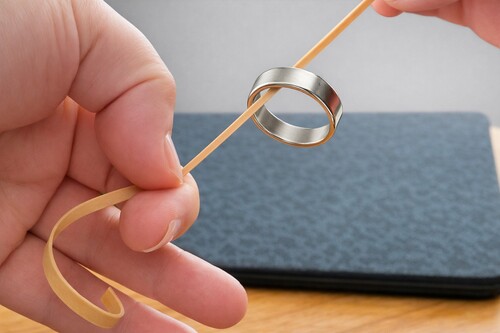
Keep most of the unused rubber band concealed in the left hand.
The backs of your hands should face the audience so the loose section remains hidden in the palm.
Hold both hands at roughly the same height.
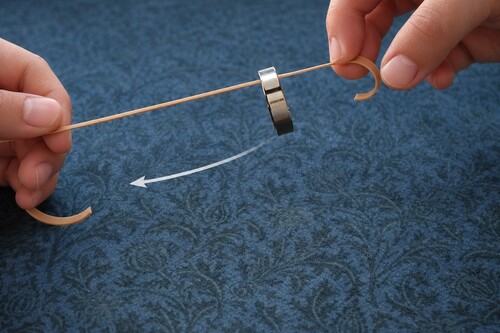
Position the ring about an inch from the right fingertips.
Raise the right hand slightly and let the ring slide toward the left.
Say, “Anyone can make the ring fall down.”

Hold the visible section of band steady.
Very slowly relax the grip of the left fingers, allowing the hidden extra length to slide outward.
As the band shortens on the visible side, the ring appears to move uphill toward the right hand.
Use a smooth rubber band with no sharp breaks. Handle borrowed jewellery carefully and avoid valuable or fragile rings until the movement is reliable.
Party Trick 4
Show your pals a large coin and a playing card with a tiny hole in the center.
Challenge them, that you can squeeze the coin throughh the hole.
Watch their expression as you appear to pull off an impossible feat.
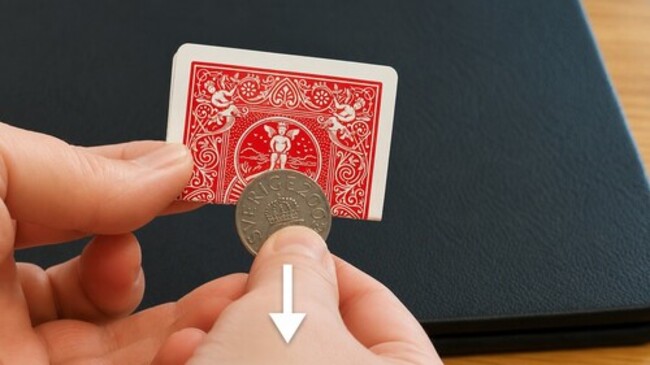
You will need one playing card, a coin and scissors.
Take care when preparing the card. Younger magicians should ask an adult to help with the cutting.
The illusion depends on keeping the secret slit hidden and maintaining the correct viewing angle throughout the routine.
Watch the complete performance and explanation before making the gimmicked card.
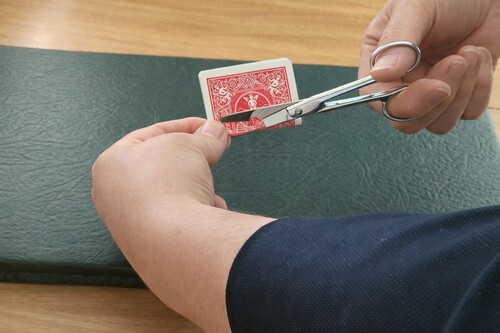
Fold the playing card in half.
Cut a small semi circle from the folded edge so that opening the card creates a round hole in the centre.
Make the hole clearly smaller than the coin you plan to use.
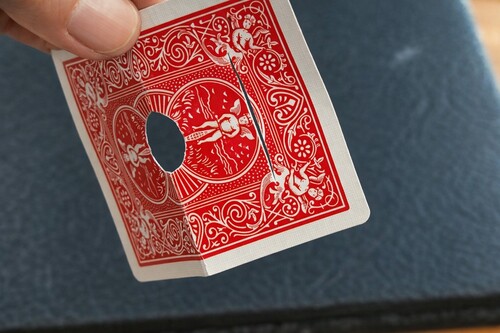
Cut a horizontal slit across the upper part of one half of the card, roughly one centimetre below the edge.
The slit must be wide enough for the coin to pass through smoothly.
Keep the cut neat so it remains difficult to notice during the performance.
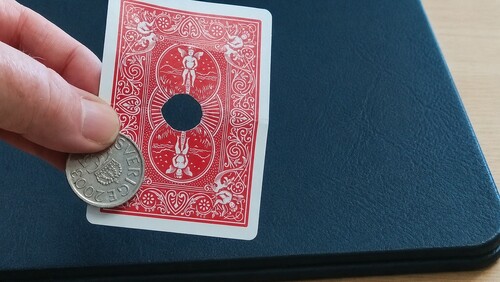
Display the card and the coin side by side.
Let the audience clearly see that the coin is much larger than the hole.
Do not draw attention to the upper part of the card where the secret slit is hidden.
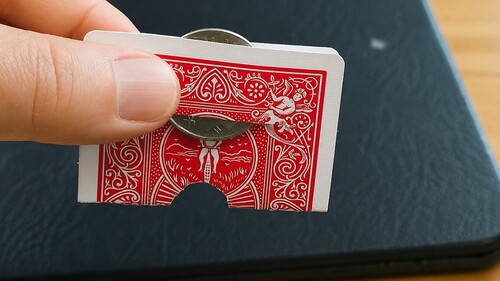
Fold the card with the slit facing toward you.
Insert the coin between the two halves as though placing it behind the small hole.
Secretly slide the coin through the hidden slit so part of it emerges behind the card.
Hold the exposed portion securely with your thumb.
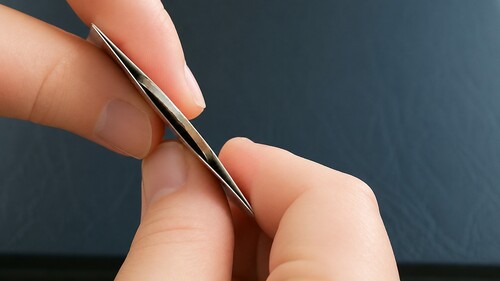
Briefly angle the top of the folded card toward the audience.
From their viewpoint, the coin appears to be trapped inside the centre of the fold.
Keep the exposed part of the coin covered by your thumb and avoid showing the back of the card.
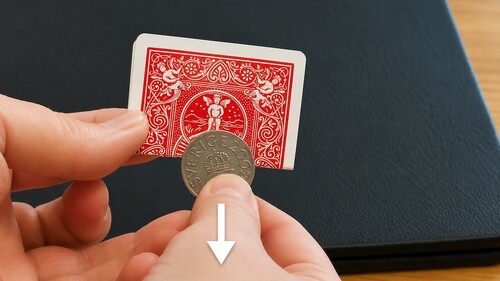
Hold the folded card facing the audience.
Pull the coin downward quickly while keeping it pressed against the card.
From the audience’s angle, the coin appears to stretch and pass directly through the tiny central hole.
The spectators assume the coin remains trapped between the two halves of the folded card.
In reality, the hidden slit allows most of the coin to move behind the card, where it can be pulled downward without passing through the small hole.
The card blocks the audience’s view of the secret route, while the fast downward action completes the illusion.
The brief top view is a powerful convincer, but keep it short. The longer the card is displayed, the greater the chance that the hidden slit or exposed coin will be noticed.
Keep the slit side of the card facing you throughout the routine.
Display the coin and small hole clearly before folding the card. The stronger the apparent impossibility, the stronger the final penetration will feel.
Use one smooth downward pull rather than several small tugs.
Once the illusion has registered, casually place the card aside and continue into another trick. A smooth transition keeps the audience focused on the magic rather than the prepared prop.
These are just a few tricks to get you started entertaining friends and families at parties
There are dozens more tricks of varying skill levels to be discovered on this website. Explore the other tutorials and build your own library of magic to perform at parties and social gatherings.
This is a fascinating hobby and hopefully will be something that you can get a lot of enjoyment out of.