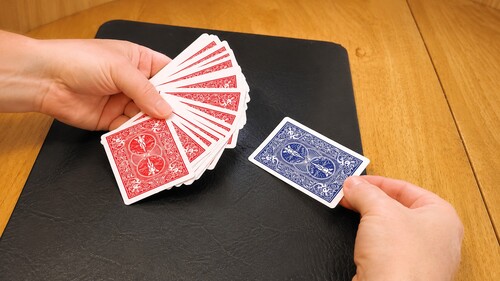
Step 1
Offer a Free Selection
Fan the deck face down and allow the spectator to choose any card. Ask them to remember it and keep it hidden from you.
Visual Card Revelation
Miss the spectator's card twice, then let the deck perform the impossible: when it lands on the table, the chosen card flips face up by itself.
Intermediate
One ordinary deck
15–20 minutes
Comedy reveal
The Effect
A spectator freely chooses a card, remembers it and returns it to the deck. You apparently lose the card with a shuffle, then make two deliberately unsuccessful attempts to name it.
Finally, you explain that the deck itself is more reliable than your concentration. You release the face-down pack above the table. As it lands, every card stays face down except the chosen card, which visibly flips face up.
Before You Begin
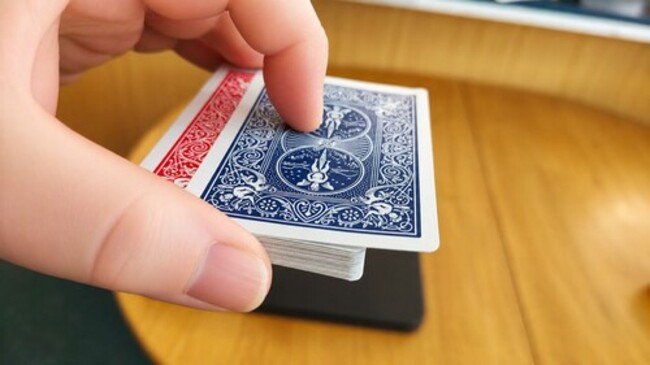
Use a reasonably flat, flexible poker-size deck.
Practise over a close-up mat, cloth or carpet before using a hard table.
You should be able to bring a selected card to the top of the deck.
Step-by-Step
Fan the deck face down and allow the spectator to choose any card. Ask them to remember it and keep it hidden from you.
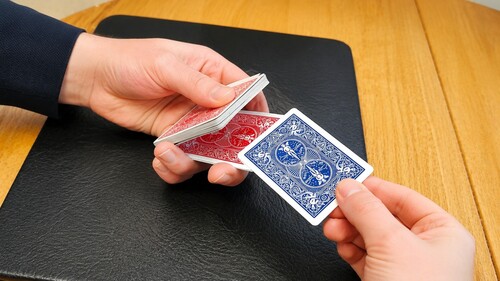
Cut the deck into two packets and invite the spectator to replace the chosen card between them. Square the deck while preparing to control the selection.
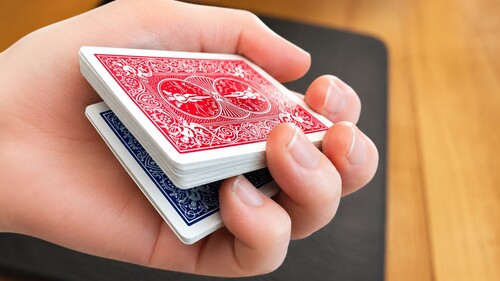
Maintain a small break above the chosen card with the tip of your little finger. Keep your grip relaxed so the break is hidden from the audience.

Lift away the packet below the break and run small groups of cards onto the remaining packet during an overhand shuffle. Arrange for the spectator's card to finish on top.
For more detail, see How to Control a Card to the Top.
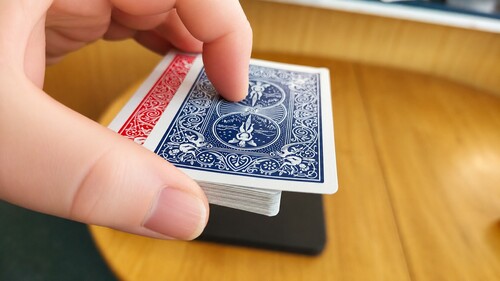
After your two false guesses, secretly push the top card slightly forward. The projection should be enough for air to catch it, but not so large that spectators notice.

Hold the deck horizontally above the table. Release your thumb and fingers together so the pack falls flat. Air resistance catches the outjogged top card and turns it face up as the deck lands.
Presentation
“I normally find cards using pure concentration. Unfortunately, my concentration appears to be on holiday today. Luckily, this is a magic deck—and it usually knows the answer even when I don't.”
The two wrong guesses create a playful moment and lower expectations. Pause before the drop so the audience clearly understands that the deck is about to reveal the card.
Performance Tips
Begin around 30 centimetres and increase gradually until the card flips reliably.
Let go with both sides at the same moment so the deck lands flat.
Keep the outjog hidden from spectators standing at the sides.
Make the wrong guesses entertaining rather than apologetic.
Warped or sticky cards can make the flip inconsistent.
Use a clean, uncluttered surface so everyone sees the face-up card.
Troubleshooting
Increase the outjog slightly, make sure the deck is level and try a slightly higher release.
Reduce the drop height, use a softer surface and check that only the top card is projecting.
Your release is probably uneven or too high. Practise letting go with both hands at exactly the same time.
Make the projection smaller and hold the deck slightly below chest height, with its long edge directed towards the audience.
Practice Plan
Repeat only the outjog and release until the card flips eight times out of ten.
Practise returning a card, holding the break and bringing it cleanly to the top.
Perform the complete sequence with patter, pauses and the final reveal.
Frequently Asked Questions
Start at approximately 30 centimetres above a soft surface. Gradually adjust the height until your particular deck produces a reliable flip.
The projecting edge catches the air as the deck falls, causing the top card to rotate while the rest of the pack stays together.
Most ordinary poker-size decks work. Very worn, warped or heavily plastic-coated cards may require a different outjog or drop height.
Yes. The method depends on controlling the selected card after it is returned rather than forcing a particular card.