The Effect
A spectator freely chooses a playing card and returns it to the middle of the deck.
With a few innocent-looking cuts and packet transfers, their chosen card is secretly brought to the top of the deck, ready for countless card tricks and revelations.
Learning to control a card is one of the most valuable skills in card magic, forming the basis of many professional routines.
Before You Begin
This control is easiest if you are already comfortable with the Mechanics Grip and the Pinky Break.
Keep your handling relaxed. The audience should believe you are simply squaring the deck after the spectator replaces their card.
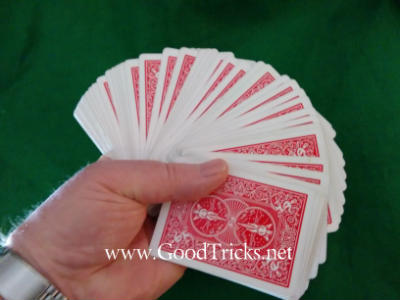
Choose a Card
Spread the cards into a fan and invite the spectator to freely choose any card.
Ask them to remember it before returning it to the deck.
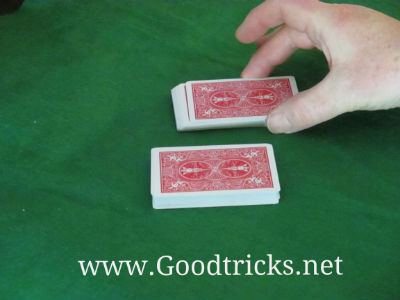
Cut the Deck
Ask the spectator to cut the deck wherever they wish.
This makes the procedure appear completely fair while preparing the deck for the control.
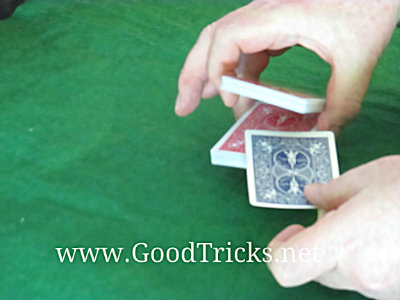
Replace the Card
Hold the two packets slightly open and ask the spectator to slide their card into the gap.
Keep the packets aligned so the insertion appears completely natural.
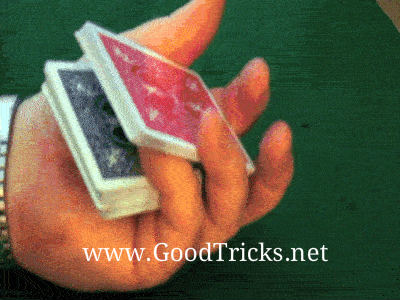
Obtain a Pinky Break
As the packets close together, secretly keep your little finger above the spectator's card.
Viewed from the front, the audience should see nothing unusual.
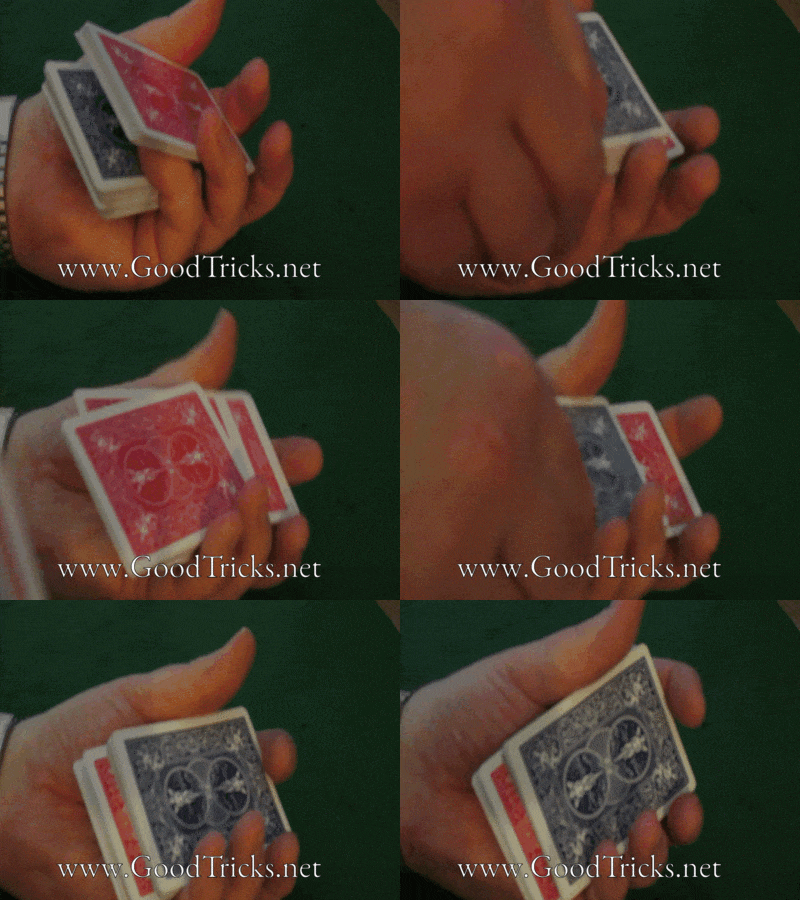
Control the Card
Pull out the lower packet while retaining the Pinky Break.
Drop small packets from the lower half onto the upper packet until only the spectator's card remains.
Finally, drop the chosen card onto the deck. It is now secretly on top.
Why This Control Works
The audience believes you are merely squaring and reassembling the deck. In reality, the packet transfer quietly moves the selected card into the perfect position for your next trick.
💡 Pro Tip
Don't rush the control. A smooth, casual action is far more convincing than trying to perform it quickly.
Common Mistakes
Avoid taking packets that are too large, as this makes the movement look awkward.
Don't stare at your hands during the control. Maintain eye contact with your spectators whenever possible.
Keep the Pinky Break small. A large gap is much easier to notice.
Most importantly, avoid hurrying. Confidence comes from smooth handling, not speed.
Practice Tips
Practise slowly until every packet looks identical.
Repeat the control while watching television or listening to music so the movement becomes automatic.
Once it feels natural, incorporate it into tricks such as Ambitious Card, Card to Pocket and many other classic routines.