The Effect
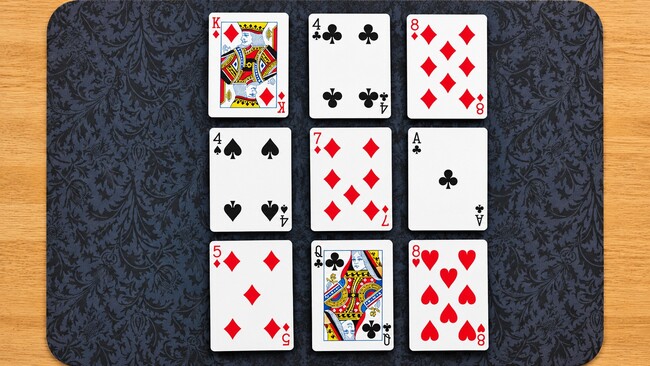
Two performers demonstrate an apparently impossible feat of mind reading. One magician lays out nine cards and asks a spectator to remember one. The second magician has been kept away and has not seen the cards or the selection.
When the second magician returns, the first hands over the deck. The partner studies the cards and eventually names the spectator's chosen card, making it look as though they have extraordinary intuition or a special ability to read minds.
What You’ll Need
🃏 A Deck of Cards
Use a normal deck. It does not need to be stacked or prepared.
👥 Two Performers
Both magicians must understand the secret thumb-position signal before performing.
👀 A Spectator
One person chooses and remembers a card from the nine-card layout.
Shuffle the Cards
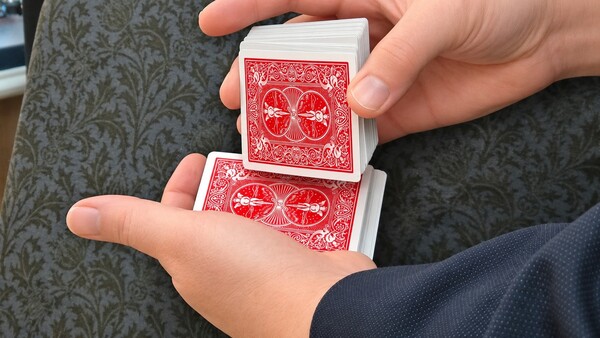
Shuffle the deck thoroughly to show that the cards are not in a special order.
If the spectator asks to shuffle the deck themselves, let them. The trick does not depend on a prepared deck.
Make the Three-by-Three Layout
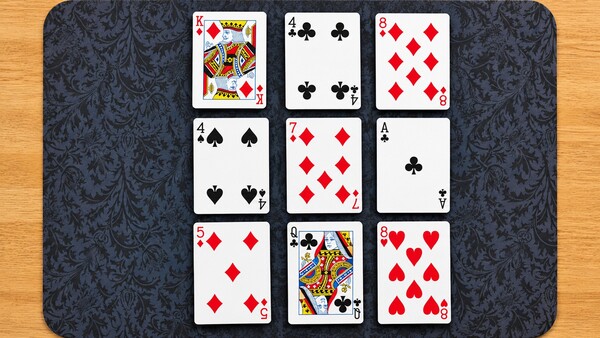
Take any nine cards and place them face up on the table in three rows, with three cards in each row.
Make sure the cards are easy for the spectator to see and remember.
Let the Spectator Choose
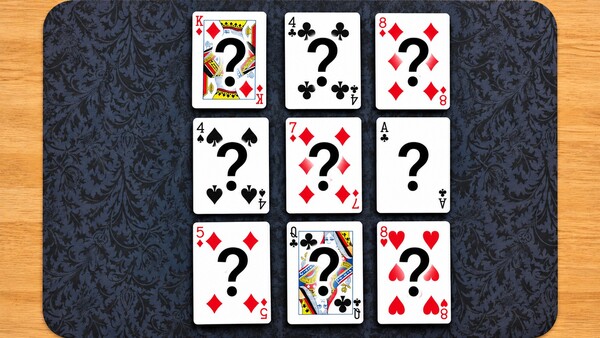
Ask magician number two to turn away or leave the room so they cannot see the layout or hear the spectator's choice.
Magician number one invites the spectator to remember any one of the nine cards. Emphasise that the choice is final and must not be changed.
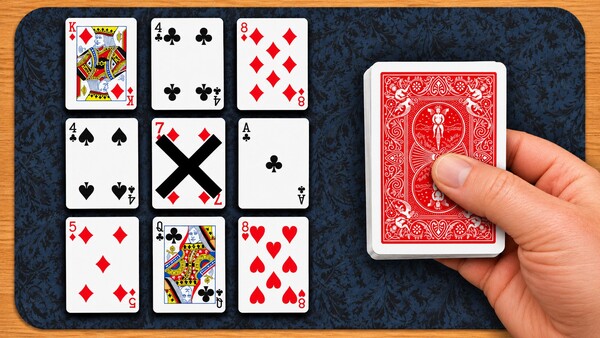
Pass the Secret Signal
Call magician number two back. Magician number one hands them the deck. This handover is the secret to the trick.
As you pass the deck, place your thumb at the position that corresponds to the spectator's chosen card in the three-by-three layout. For example, if the spectator chose the centre card, your thumb should rest at the centre position of the deck.
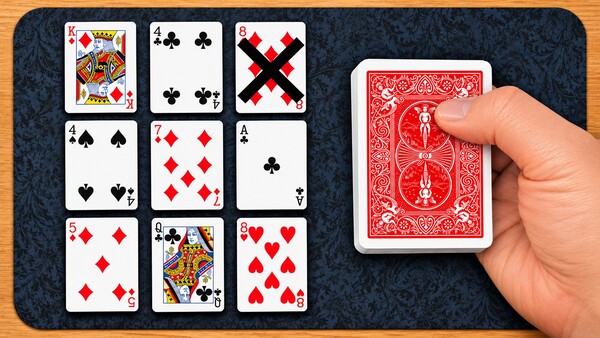
Identify and Reveal the Card
The thumb position tells magician number two where the selected card was located in the original grid. The two performers should agree in advance how the positions are represented on the deck.
Magician number two can now apparently study the layout, eliminate the other cards, and confidently name the spectator's selection.
The Reveal
Magician number two now knows the selected card’s position from the secret thumb signal. They can take their time, apparently studying the cards and eliminating the ones that are not correct, before confidently naming the chosen card.
Keep the reveal relaxed. A little hesitation can make the apparent mind reading more convincing, but avoid making the process so long that the method becomes obvious.
🎩 The Secret
The trick is not a genuine test of mind reading. The first magician secretly tells the second magician where to look by using the thumb position during the handover of the deck.
Performance Tips
Practise the handover until the thumb position looks completely natural. The signal should appear to be an ordinary way of holding the deck, not a deliberate gesture.
Keep the second magician well away from the layout while the spectator makes their choice. Both performers should agree on the position system before presenting the trick.
Common Mistakes
Do not let the second magician glimpse the cards or the spectator’s selection.
Do not make the thumb movement look deliberate or exaggerated when passing the deck.
Make sure both performers interpret the positions in exactly the same way. Confusing the top and bottom of the deck can lead to the wrong reveal.
Frequently Asked Questions
Does the deck need to be set up?
No. Shuffle the deck thoroughly; the method relies on the secret signal, not a prepared order.
Can the spectator choose any of the nine cards?
Yes. They can choose any card in the three-by-three layout, and should remember their selection without changing it.
What is the secret?
The first magician communicates the selected card’s position by where their thumb rests on the deck while handing it to the second magician.