The Effect
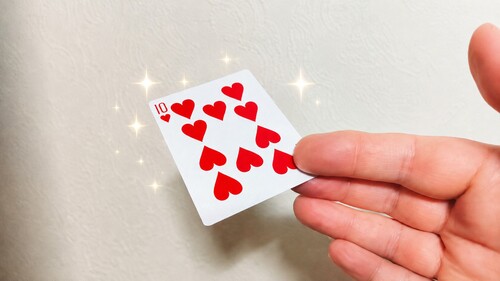
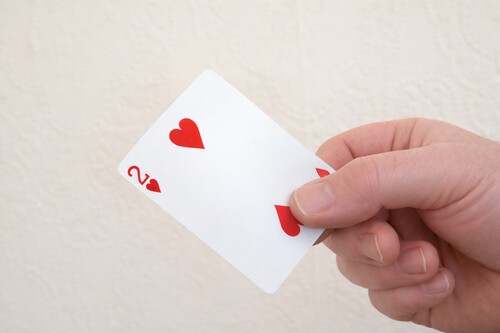
A playing card is held openly at the magician’s fingertips in full view of the audience.
Without covering the card, it suddenly vanishes and the palm of the hand appears completely empty.
A moment later, the magician reaches into the air and makes the same card reappear.
What You’ll Need
🃏 One Playing Card
Use a clean, flexible poker-size card that bends comfortably.
🪞 Mirror or Camera
Check the vanish from the spectator’s viewing angle.
💡 Good Lighting
Practise where you can clearly see the card edges and finger positions.
The Method
The card never leaves your hand. Your fingers bend it behind the hand, where it remains hidden from spectators looking from the front.
The move is commonly known as a back-palm style concealment. It is visually strong, but it depends on relaxed fingers and controlled viewing angles.
Step 1 — Display the Card
Show one playing card clearly to the audience.
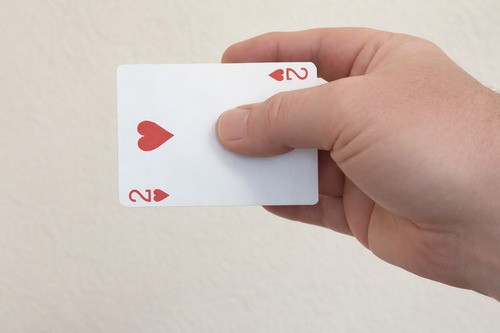
Hold the card with your thumb on one face and your two middle fingers on the opposite face.
Step 2 — Position the Middle Fingers
Place the two middle fingers firmly against the opposite face of the card.
Keep the hand relaxed. The grip should be secure without appearing tense.
Step 3 — Grip the Long Edges
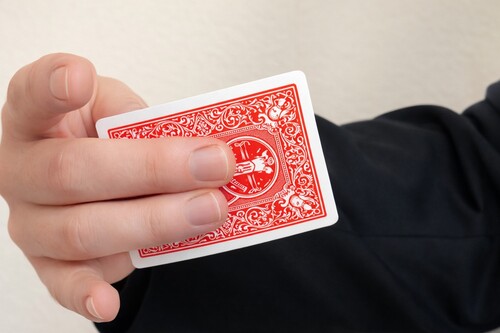
Grip the lengthwise edges of the card with your first and fourth fingers.
These two fingers hold the card as it moves behind the hand.
Step 4 — Bend the Card Back
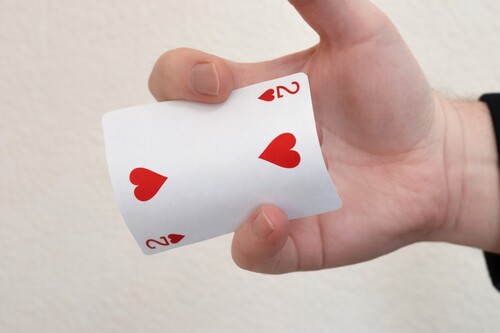
Pull the long edges backward with the first and fourth fingers while the two middle fingers press against the other side.
This bends the card into the position needed for the concealment.
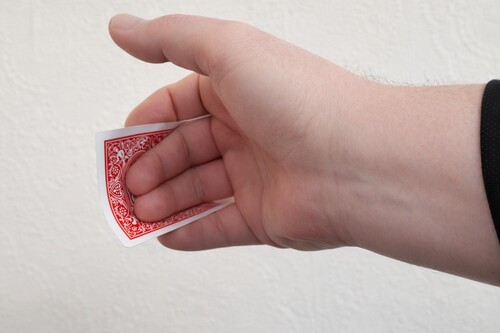
Step 5 — Straighten the Middle Fingers
Straighten the two middle fingers while maintaining the edge grip with the first and fourth fingers.
As the fingers extend, the card travels behind the hand.
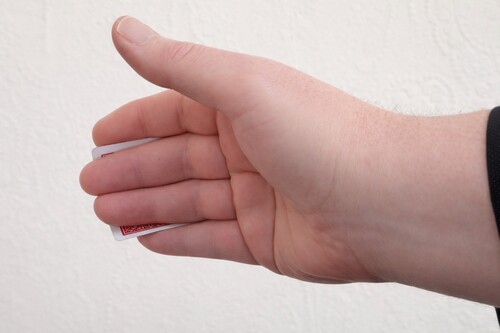
Step 6 — Show the Hand Apparently Empty
The card is now concealed behind the hand.
From the audience’s view of the palm, the card appears to have vanished. Keep spectators directly in front of you and avoid exposing the side or back of the hand.
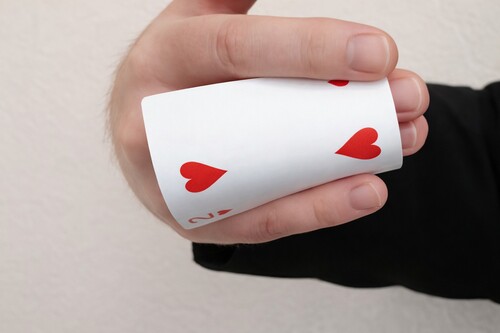
Step 7 — Begin the Reappearance
Curl the two middle fingers inward again and bring the thumb against the concealed card.
This prepares the card to move back into view.
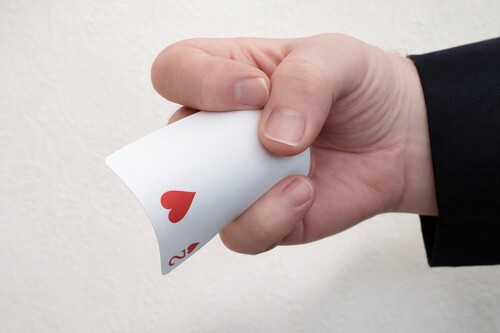
Step 8 — Pluck the Card From the Air
Use the thumb to push the card upward until you can grip it naturally at the fingertips.
Add a small reaching gesture so it appears that you have snatched the card from thin air.
Watch the Tutorial
Watch the complete vanish and reappearance, then compare the hand positions with the photographs above.
Why the Vanish Works
The card remains gripped behind the hand while the extended fingers create the appearance of an empty palm.
Spectators follow the visible fingers and assume the card would still be in front of them if it had not genuinely disappeared.
Smooth timing, relaxed fingers and a controlled viewing angle make the concealment difficult to detect.
Performance Tips
Keep the wrist and fingers relaxed throughout the move.
Use a small wave, toss or plucking gesture to give the secret action a natural reason.
Show the empty palm only briefly. Do not invite spectators to inspect the hand from different angles.
Practise the vanish and reappearance together so they feel like one continuous magical sequence.
🎩 Magic Tip
Angle control matters more than speed. A smooth vanish performed for spectators directly in front of you is stronger than a rushed move performed without checking the sightline.
🎯 Skills Used
Common Mistakes
Do not grip the card so tightly that the hand looks stiff.
Avoid allowing spectators to stand beside or behind the performing hand.
Do not straighten the fingers unevenly or pause halfway through the vanish.
Keep the hidden card secure so its edge does not flash beyond the hand.
Do not perform until the reappearance is as smooth as the vanish.
Practice Plan
First practise moving the card behind the hand without trying to make the action fast.
Next, use a mirror to find the safe front-facing angle.
Record the vanish from the spectator’s eye level and check for visible card edges or finger tension.
Add the reappearance once the concealment feels secure.
Finally, combine the move with a short line of presentation and a natural magical gesture.
Frequently Asked Questions
Is this card vanish suitable for beginners?
It is best for confident beginners or intermediate learners. The mechanics are straightforward, but the move needs finger control, a relaxed grip and careful angle management.
What kind of playing card works best?
Use a clean, flexible poker-size card. Very stiff, bent or damaged cards are harder to conceal smoothly.
Can people stand beside the magician?
No. This vanish is angle-sensitive. Keep spectators mainly in front of the performing hand and avoid surrounded situations.
How long does the move take to learn?
You can understand the mechanics quickly, but making the vanish smooth and deceptive usually requires repeated mirror and camera practice.
Want an Easier Card Vanish?
This fingertip vanish requires finger control and careful angles. Try the simpler disappearing-card method first while building confidence.