Display Both Boxes
Open the two visible matchboxes. Let everyone see that one contains matches and the other is completely empty.
Beginner close-up magic
Show one full matchbox and one empty matchbox, mix them on the table, and challenge a spectator to identify the empty one. When you shake their chosen box, it mysteriously rattles as though it contains matches.
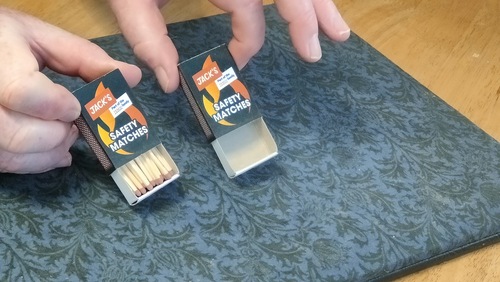
The visible boxes look completely ordinary, which makes the surprise rattle especially convincing.
What the audience sees
Two matchboxes are opened. One clearly contains matches while the other is empty. After both are closed and moved around on the table, the spectator points to the box they believe is empty.
You lift the selected box and shake it. Everyone hears the unmistakable sound of matches rattling inside. The spectator appears to have chosen incorrectly—even though they were certain of their answer.
Before you perform
The sound does not come from the box in your hand. A third, full matchbox is hidden beneath your left sleeve and secured close to your wrist.
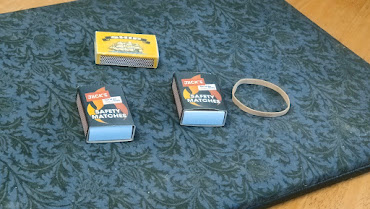
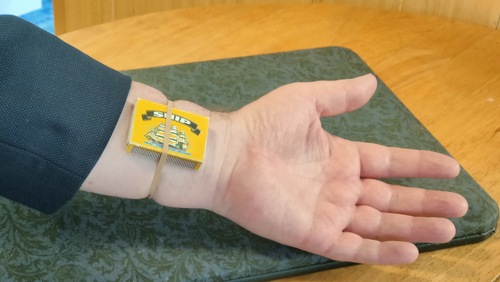
Use safety matches and keep every match inside a closed box. Do not perform near candles, flames, heaters, cooking equipment, or other ignition sources. Children should prepare and perform this trick only with responsible adult supervision.
Step by step
Open the two visible matchboxes. Let everyone see that one contains matches and the other is completely empty.
Close both boxes without rushing. Keep your left wrist relaxed so the hidden box remains silent.
Move the boxes back and forth a few times. The mix should be brief and easy to follow—not a frantic shell game.
Ask the spectator to point to the empty matchbox. Encourage them to commit clearly before you touch either box.
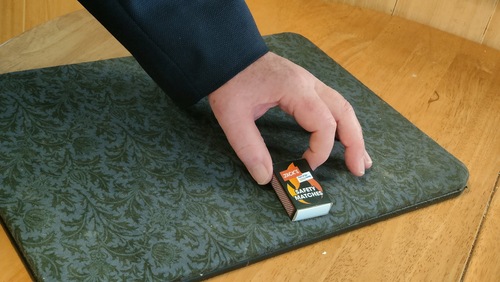
Pick up their selection with your left hand. Keep the fingers and wrist looking natural, as though you are simply about to test the box.
Shake your left hand with a short, crisp motion. The concealed full matchbox rattles beneath the sleeve, but the sound appears to come from the visible box.
Stop moving and let the sound register. A simple line such as “Sorry—wrong box” is stronger than a long explanation.
You may repeat the challenge once, but avoid overdoing it. Repetition gives spectators more chances to study your sleeve and handling.

The real secret
The trick succeeds because the rattle begins at exactly the moment the visible box is shaken. The audience automatically connects the sound with the object they can see.
Keep your concealed wrist perfectly quiet during the display, mix, and selection. The hidden box should make no noise until the chosen matchbox is already in your hand.
Make it convincing
One or two sharp movements sound more natural than a long, exaggerated shake.
Tension attracts attention. Let the arm hang naturally until it is time to make the sound.
Spectators should feel they could have followed the boxes. The mystery comes from the rattle.
Look at the visible boxes while mixing them. Your gaze helps guide everyone else’s attention.
Similar branding, size, and condition prevent spectators from tracking the boxes by appearance.
A clean mystery is better than repeated demonstrations that invite method hunting.
Avoid these problems
The hidden box rattles while you are showing or mixing the visible boxes. Practise moving silently.
An oversized hidden box or tight sleeve creates an obvious shape around the wrist.
The sound begins too early, breaking the connection between the noise and the chosen box.
Too much movement makes the routine feel like a puzzle rather than a clean magical challenge.
Rehearse efficiently
Watch the handling
Questions beginners ask
They may handle the two visible boxes before the routine. Do not let anyone inspect your sleeve or wrist.
No, but it should contain enough matches to make a clear rattle with a small wrist movement.
Yes. Any lightweight container can work if the hidden sound closely matches the visible object.
The method is simple, but matches require adult supervision. A safer alternative is to use beads in small boxes.