The Effect
A small coin is held clearly in front of the spectator.
You explain that you are going to make the money multiply. One hand briefly covers the coin and, in an instant, the small coin apparently changes into two larger coins.
The two larger coins can then be shown openly.
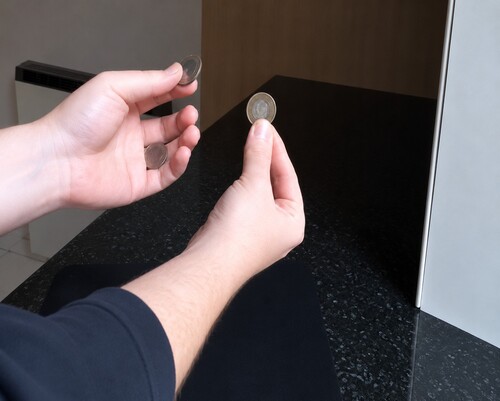
Watch the Tutorial
What You’ll Need
🪙 One Small Coin
This is the coin the spectator sees at the beginning.
🪙 Two Larger Coins
These remain hidden behind the small coin until the transformation.
🪞 A Mirror
Use mirror practice to check the front viewing angle and concealment.
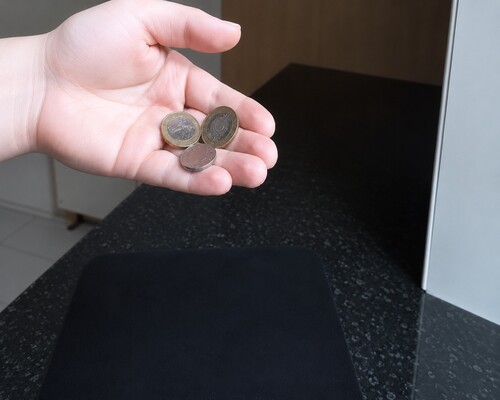
Prepare the Three Coins
Begin with one small coin and two larger coins.
The larger coins should be easy to grip together while the small coin is used to hide them from the spectator’s view.
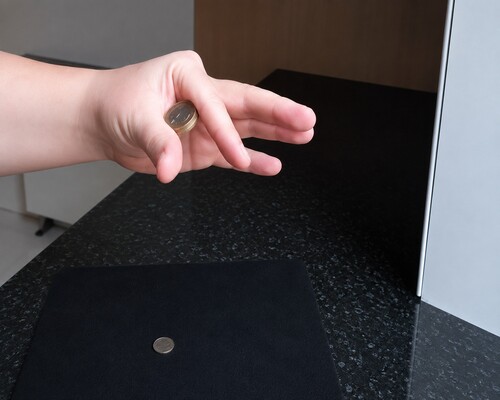
Position the Two Larger Coins
Place the two larger coins together and hold them between your thumb and first finger.
Keep the edges aligned so they form one compact hidden packet.
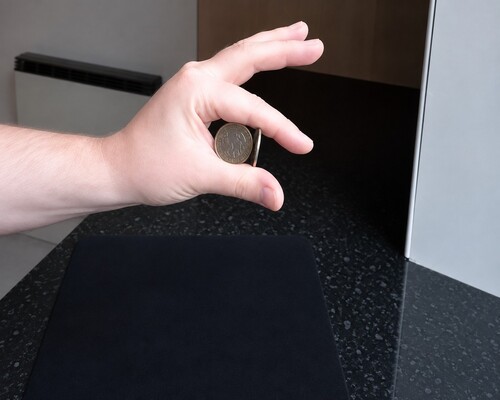
Place the Small Coin in Front
Position the small coin vertically in front of the two larger coins.
From the correct front angle, the audience should see only the small coin.
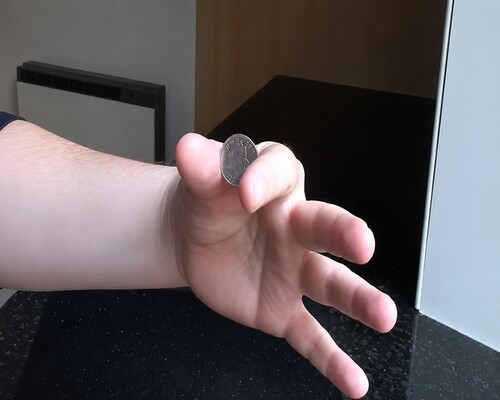
Display the Small Coin
Face the small coin directly towards the spectator.
This viewing angle hides the two larger coins behind it, creating the impression that you are holding only one coin.
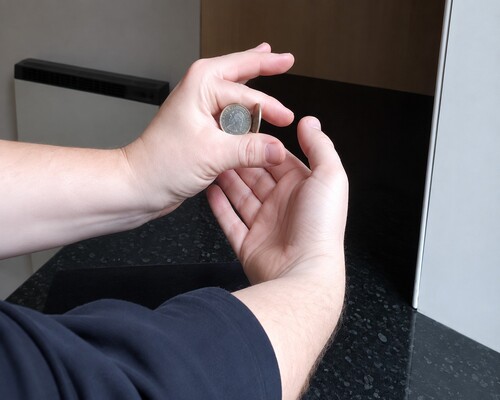
Cover the Coin
Bring your other hand over and under the displayed coin as though you are simply taking hold of it.
Use the larger covering action to hide the secret movement that follows.
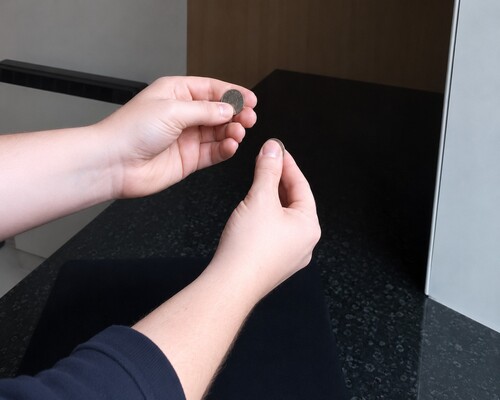
Hide the Small Coin
Use your thumb to scoop the small coin into finger palm in the covering hand.
At the same moment, use your thumbs and first fingers to take control of the two larger coins.
Reveal the Two Larger Coins
Slide the two larger coins up into view and separate them clearly.
Keep the original small coin concealed in finger palm while the audience reacts to the apparent multiplication.
Why It Works
The small coin acts as a visual screen. When it is held directly towards the spectator, the two larger coins remain hidden behind it.
The covering hand then provides the moment needed to palm the small coin and bring the larger coins into view.
🎩 The Critical Detail
The trick depends heavily on the audience’s viewing angle. If they move too far to either side, the hidden coins may become visible.
Performance Tips
👀 Control the Angle
Keep the coin face squarely towards the spectator during the display.
🖐 Keep the Palm Relaxed
A tense hand makes the hidden small coin more suspicious.
✨ Use a Simple Story
A line about multiplying your money gives the move a natural reason.
🪞 Practise in a Mirror
Check exactly what the spectator can see from the front and slightly off-centre.
Common Mistakes
The larger coins flash from the side
Narrow the audience angle and keep the small coin facing them directly.
The covering action looks suspicious
Make it one smooth motion rather than pausing with both hands around the coins.
The small coin is visible after the reveal
Practise the finger palm until the hand can remain relaxed and natural.
The coins separate before the reveal
Keep the two large coins aligned until the covering hand takes control.
Practice Plan
1. Master the Display
Find the angle where the small coin completely hides the larger pair.
2. Practise the Scoop
Move the small coin into finger palm without looking at your hands.
3. Join the Actions
Combine the cover, palm and reveal into one continuous movement.
4. Add Presentation
Rehearse your patter and eye contact so the trick feels spontaneous.
Frequently Asked Questions
How many coins are needed?
One small coin and two larger coins.
Can the larger coins be examined?
Yes. They can be shown openly after the transformation.
Why are viewing angles so important?
The small coin must hide the two larger coins until the switch is covered.
Is the trick suitable for beginners?
Yes, provided you spend some time practising the angle and finger palm.