The Effect
A playing card is shown openly, torn first into halves and then into four separate quarters.
The pieces are squared together. With a brief magical gesture, the packet is unfolded and the card is shown completely restored. The secret is explained, below.

What You’ll Need
🃏 Two Identical Cards
Use two cards with the same value and suit.
👖 A Convenient Pocket
Plan where the torn pieces will be secretly disposed of.
🪞 Mirror Practice
Rehearse the concealment and switch from the spectator’s viewpoint.
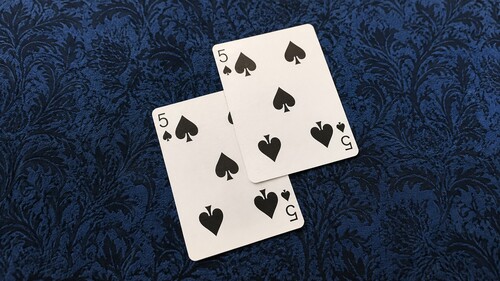
Select Two Matching Cards
Choose two identical playing cards. One will be torn; the other creates the restoration.
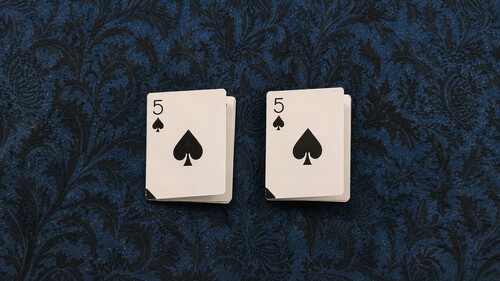
Fold Both Cards Into Quarters
Fold each card lengthwise and then widthwise. Press the folds firmly so the creases match.
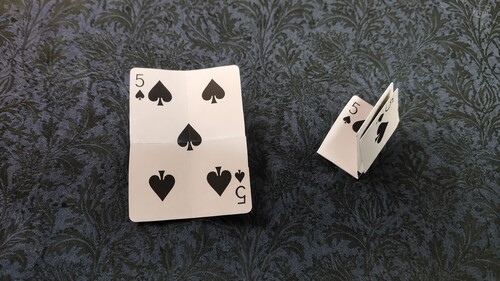
Unfold One Card and Conceal the Other
Unfold one card completely. Keep the second card folded and conceal it in finger palm.
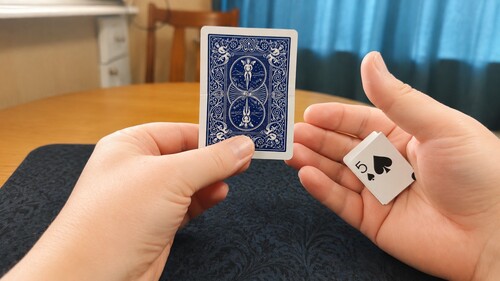
Display the Whole Card
Show the unfolded card clearly while keeping the concealed hand relaxed and angled away.
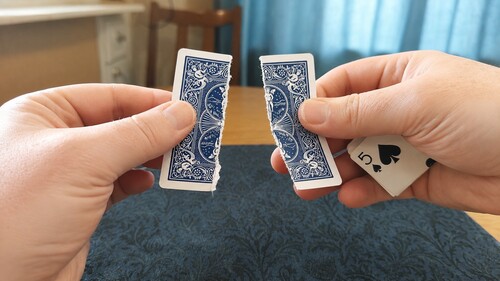
Tear the Card in Half
Tear the displayed card lengthwise along its prepared crease.
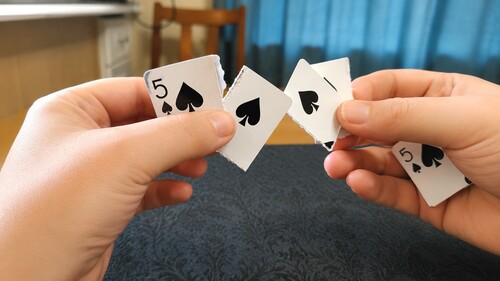
Tear the Halves Into Quarters
Place the halves together and tear them across the remaining crease. Briefly display the four pieces.
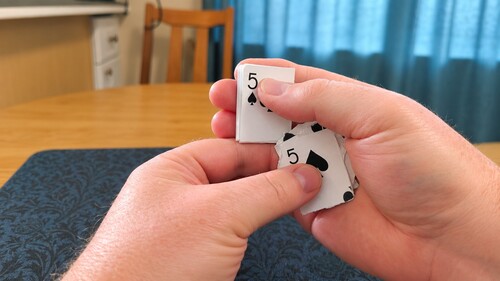
Switch the Torn Pieces
Square the pieces and move them behind the hand concealing the duplicate. Push the folded whole card into view while retaining the torn pieces.
- Keep both packets aligned.
- Use the larger hand movement to cover the smaller thumb action.
- Continue immediately into the unfolding.
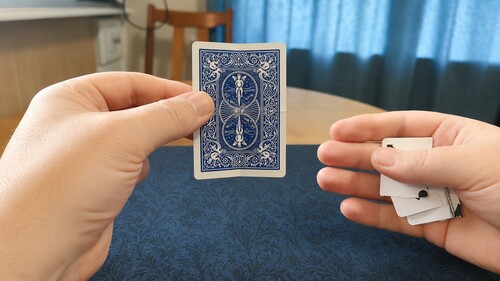
Reveal the Restored Card
Slowly unfold the duplicate and show the apparently restored card. Dispose of the torn pieces when attention is on the restoration.
Why the Trick Works
The audience remembers seeing one card before it was torn. Because the folded duplicate looks identical and appears exactly when the pieces are hidden, spectators naturally assume it is the same card.
🎩 The Critical Moment
Do not pause or stare at your hands during the exchange. Continue naturally into the unfolding action.
Performance Tips
🖐 Keep the Palm Natural
Avoid stiff fingers while concealing either packet.
👀 Use Eye Contact
Look at the audience during the switch.
🐢 Unfold Slowly
Let the restoration register clearly.
🧥 Plan the Disposal
Know which pocket will receive the torn pieces.
Common Mistakes
The duplicate appears too early
Angle the concealed hand away and keep it relaxed.
The switch looks suspicious
Make it part of one continuous squaring and unfolding action.
The creases do not match
Fold both cards together during preparation.
The torn pieces are exposed
Keep them finger-palmed until attention moves to the restored card.
Practice Plan
1. Practise the Palm
Hold the folded duplicate while gesturing naturally.
2. Rehearse the Switch
Repeat the exchange without tearing new cards.
3. Add the Unfolding
Join the switch and restoration into one movement.
4. Perform the Routine
Add the tearing, eye contact and disposal.
Frequently Asked Questions
Does the trick use a duplicate card?
Yes. You need two cards with the same value and suit.
Can the restored card be examined?
The restored duplicate can be shown openly, but the torn pieces must remain concealed.
Why are both cards folded first?
Matching creases help the duplicate resemble the original and make the displayed card easier to tear.
Is this suitable for beginners?
Yes, although the switch should be practised until it can be performed without hesitation.