Entertainment Only
This routine is a theatrical card trick, not a gambling method. Practise the deal only as part of a magic performance and never use sleight of hand to gain an unfair advantage in a real game.
The Story
The routine is framed as a Wild West legend about Jesse James and six members of his gang celebrating after a robbery.
Jesse deals a poker game, but the gang becomes suspicious after noticing that he appears to deal himself cards from the bottom.
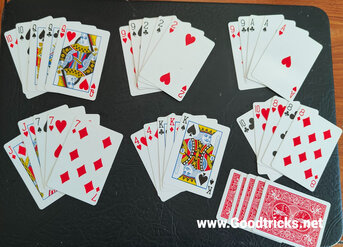
When the hands are revealed, every other player has a full house. Jesse is then denied his original hand and forced to use the next five cards from the deck instead.
Those five cards form a straight flush, beating every full house.
Historical Note
This is a fictional performance story inspired by the legend of Jesse James, not a verified account of his death.
The Effect
Seven poker hands are dealt around an imaginary table.
The six gang members each receive a full house.
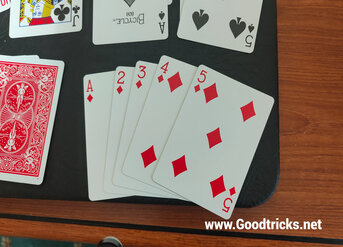
Jesse’s replacement hand, made from the next five cards in the deck, is revealed as a straight flush.
His original hand is then shown to be ordinary, adding another surprising finish.
Secret Preparation
Remove both Jokers so the deck contains 52 cards.
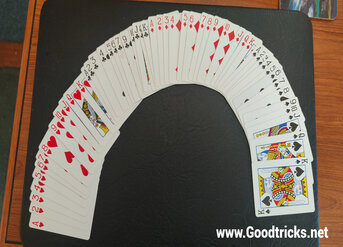
Arrange the pack in new-deck order, with each suit running in sequence from Ace through King.
Keep the order intact until the performance begins.
Give the Deck Six Complete Cuts

As you introduce the six gang members, give the deck one complete cut for each player.
Perform every cut yourself while presenting it as though each imaginary player has taken a turn.
A complete cut changes the starting point but preserves the cyclic order of the deck.
Establish the Table
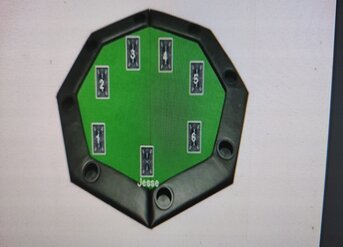
Imagine six players seated around the table with yourself, playing Jesse, as the dealer.
Deal clockwise from left to right and always deal your own card last.
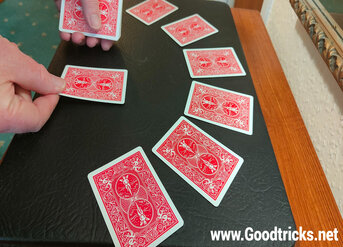
Deal the First Round Normally
Deal one face-down card to each of the six players.
Deal the seventh card, your own, from the top in the normal way.
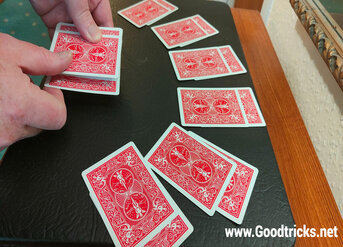
Use a Bottom Deal in Round Two
Deal the second round normally to the six players.
Secretly deal your own card from the bottom of the deck.
Keep the rhythm identical to the ordinary deals.
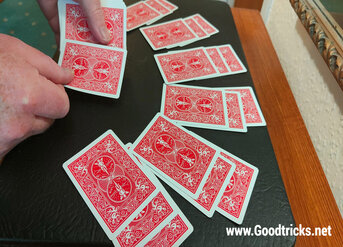
Deal the Third Round Normally
Deal all seven cards from the top in the usual clockwise sequence.
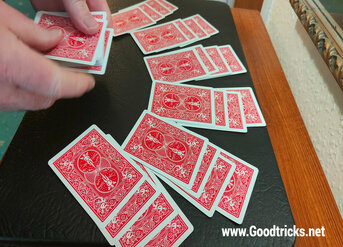
Use a Bottom Deal in Round Four
Deal normally to all six gang members.
Take your own fourth card from the bottom of the deck.
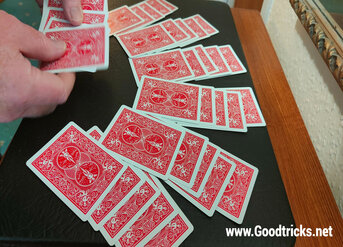
Complete the Final Round
Deal the fifth card to every hand from the top.
There should now be seven complete five-card hands on the table.
Reveal the Six Full Houses
Explain that one gang member noticed Jesse dealing from the bottom and accused him of cheating.
Turn over the six other hands one at a time.
Each player has a full house.
Reveal the Straight Flush
According to the story, the gang refuses to accept Jesse’s original cards because he was seen dealing from the bottom.
Deal the top five cards remaining in the deck as his replacement hand.
Turn them over to reveal a straight flush.
The Extra Finish
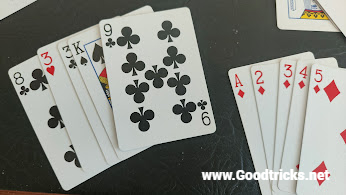
Turn over Jesse’s original five-card hand.
It is an ordinary losing hand, suggesting that the suspicious-looking bottom deals were not used to create a winning hand for himself.
Why the Trick Works
New-deck order places values and suits into a predictable repeating pattern.
Complete cuts preserve that pattern while changing the apparent starting point.
The two bottom deals alter only Jesse’s hand while leaving the other hands and the final five-card sequence in position.
The long story disguises the mathematical structure and turns a dealing demonstration into a memorable routine.
Performance Tips
Memorise the story so you can concentrate on the deal.
Keep every card moving at the same speed, especially during the bottom deals.
Reveal the full houses one at a time to let the impossibility build.
Pause before revealing the straight flush.
🎩 Magic Tip
Treat the routine as a piece of theatre. The poker hands are impressive, but the Wild West story is what makes the trick memorable.
Common Mistakes
Do not use partial cuts or shuffles after arranging the deck.
Keep track of all seven positions and always deal yourself last.
Perform bottom deals only during rounds two and four.
Do not rush the reveals or mix up the six player hands.
Test the complete sequence before performing, as an incorrect setup or cut will spoil the result.
Practice Plan
First practise setting the deck into new-deck order.
Deal the entire routine face up to understand how the pattern develops.
Practise the bottom deal separately until it matches your normal deal.
Finally, rehearse the story and card handling together from beginning to end.