The Effect
A Bill Is Torn — Then Restored
A bill is folded in half and a short tear is visibly made through the folded edge.
You appear to rip the loose section completely away and dispose of it. Moments later, the bill is opened and shown apparently restored.
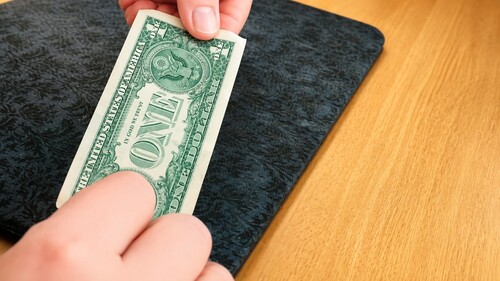
Introduce the Bill
Begin by showing the bill openly. If you are performing with a borrowed bill, make sure the spectator understands exactly what you intend to do before making any tear.
The fact that the bill appears ordinary helps make the restoration more convincing.
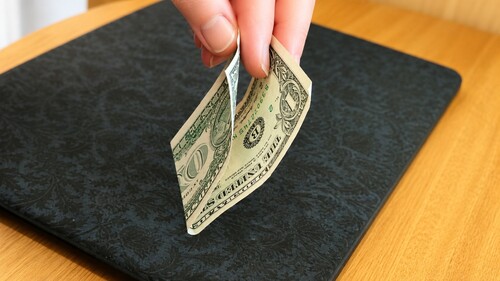
Fold the Bill in Half
Face the spectator and fold the bill in half as shown.
Keep the portrait side facing towards the inside of the fold. This sets the bill into the correct position for the secret handling.
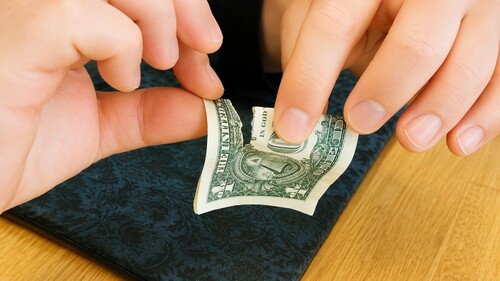
Make the Visible Tear
Hold the folded edge upright and make a short tear down through the bill.
Position the tear near printed detail that will help disguise it later when the bill is displayed as restored.
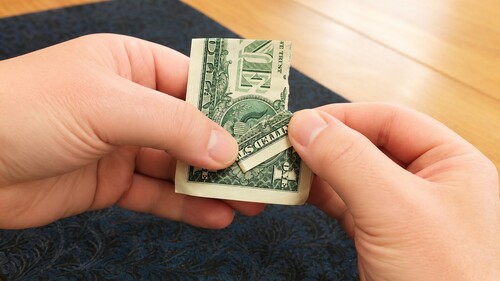
Hide the Torn Flap
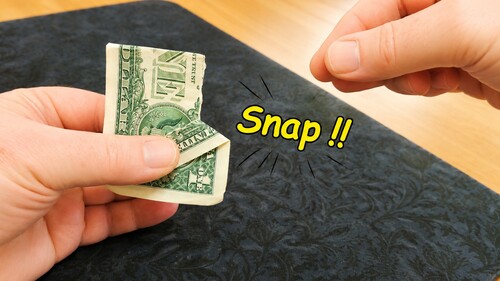
Hold the bill with the folded edge at the top in your left hand, with your thumb facing towards you.
Reach across with the right hand as though you are about to grab the torn piece. Use the right thumb to push the torn flap flat against the back of the bill.
Shift the left thumb into position so it secretly holds the flap flat and hidden.
Create the Sound of the Tear
Hold the bill firmly in the left hand.
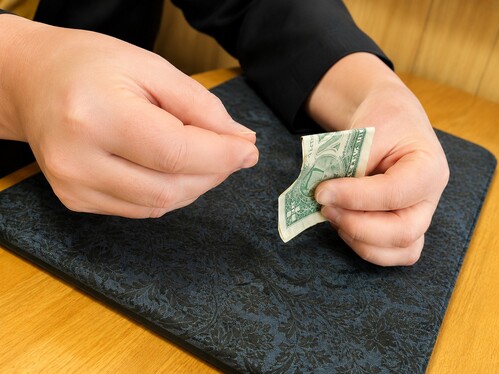
Pinch near the base of the tear with the right thumb and first finger, then pull sharply to the right.
The quick movement creates a convincing tearing sound and gives the impression that a piece has been pulled away.
Convince Them You Have the Piece
Your audience should now believe that the right hand is holding the piece supposedly torn from the bill.
Keep the fingers naturally closed as though protecting a tiny scrap of paper.
Dispose of the Imaginary Piece
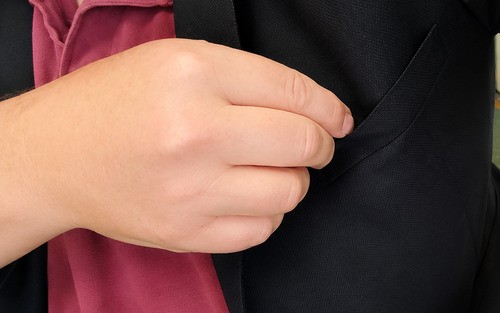
Pretend to place the torn piece into a pocket, or use another natural action that makes sense for your presentation.
The original routine also suggests pretending to eat the piece. Whatever presentation you choose, the purpose is to reinforce the belief that a section has genuinely been removed.
Begin the Restoration
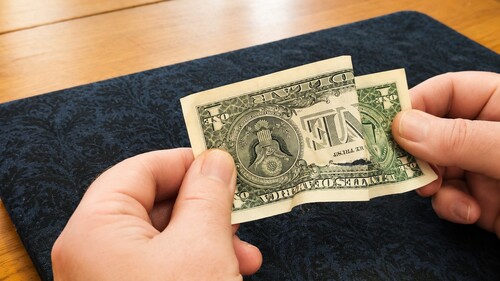
Position the bill with the open fold along the bottom.
Grip the edge facing the spectator with the right hand and begin unfolding the bill by pulling the hands apart.
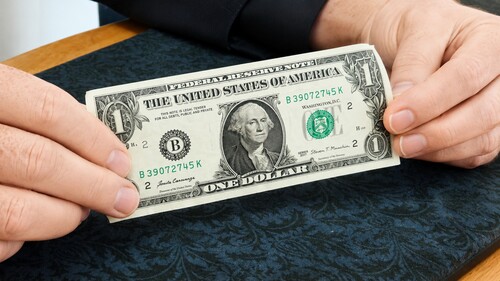
Snap the Bill Open
Snap the bill open quickly and maintain tension by pulling gently outwards with both hands.
The tension helps keep the torn section aligned and hidden from the spectator's view, creating the appearance of a completely restored bill.
If you pretended to put a torn piece in your mouth, you could even pretend to spit out the piece back onto the bill at the same time that you are snapping the bill open
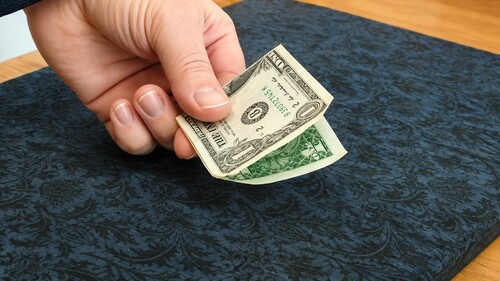
Finish Naturally
Use a little conversation or misdirection before bringing the routine to a close.
If the bill has been torn, do not hand it out as though it were undamaged. Either retain your own practice bill or clearly explain its condition.
Why the Illusion Works
The audience sees and hears what appears to be a genuine tear, then watches the right hand behave as though it contains the missing piece.
Meanwhile, the real torn flap remains attached and is secretly folded flat against the rear of the bill. When the bill is opened under tension, the tear is concealed by alignment, angle and movement.
🧠 The Important Convincer
The simulated ripping action and sound are just as important as the hidden flap. Together they create the memory that a piece was physically removed.
Performance Tips
👀 Watch the Angles
Keep the folded flap hidden from side views throughout the handling.
🔊 Sell the Tear
The quick pulling action and ripping sound make the fake removal much more believable.
🖐 Keep Tension
During the restoration display, gentle outward tension keeps the damaged area aligned.
🎭 Use a Natural Disposal
Pocketing or apparently eating the torn piece gives the audience a reason to stop thinking about your right hand.
⚠ Practice Sensibly
Learn the handling with your own bill, a suitable practice note or a similarly sized piece of paper. Do not damage a spectator's property without their clear permission.
Common Mistakes
The torn flap becomes visible
Check your viewing angle and make sure the left thumb keeps the flap flat against the back of the bill.
The tearing action looks weak
Make the right-hand pull short and sharp so the movement and sound suggest that a piece has genuinely come away.
The restoration looks too careful
Avoid slowly inspecting the torn area. Open the bill with confidence and immediately display the overall restored shape.
The spectator wants to inspect the bill
This handling does not genuinely repair the tear, so plan your ending accordingly and never imply that a damaged borrowed bill is actually intact.
Practice Plan
1. Learn the Fold
Practise making and hiding the torn flap before adding any performance.
2. Rehearse the Fake Tear
Work on coordinating the pull, sound and hand position so they read as one action.
3. Practise the Display
Learn exactly how much tension is needed to keep the tear hidden when the bill is opened.
4. Add Presentation
Rehearse the disposal of the imaginary piece and the final restoration as one continuous sequence.